Download
1 / 18
180 likes | 313 Vues
The Harlem Renaissance, spanning from 1920 to 1930, marked a vibrant cultural explosion among African-Americans in the North, following the Great Migration. This period saw remarkable activity in art, literature, music, and dance, as figures like Langston Hughes and Duke Ellington celebrated black heritage and identity. Despite facing adversity, including racial tensions and economic challenges, African-Americans aimed for self-expression and a new cultural identity. This era significantly influenced American culture and laid the groundwork for future movements in civil rights and artistic expression.

E N D
The Harlem Renaissance 1920-1930 A Cultural Explosion in the North
Push Racism/Jim Crow Unemployment Boll Weevil Pull WWI Equality City life “The Great Migration”
“The Great Migration” • One of two “Great Migrations” • 1910-1920=300,000 to 1 million migrated • Outbreak of WWI in 1914 • 90% of African-Americans lived in the South • 75% of them lived in rural areas • Not an easy transition • Red Summer 1919 • Race riots erupted in 22 American cities • Tulsa 1921
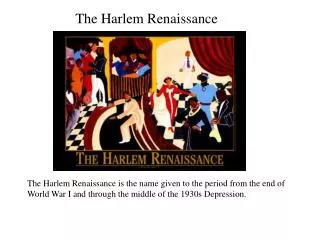
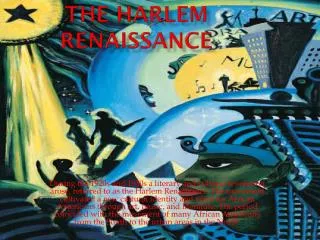
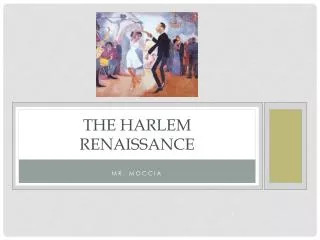
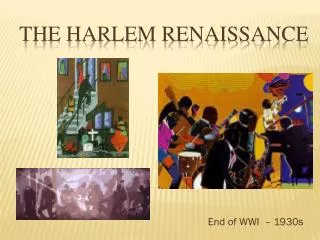
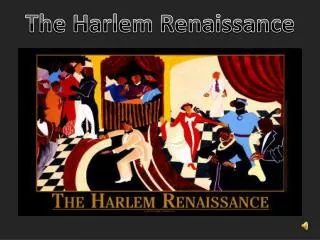
The Harlem Renaissance • What was it? • From 1920 until about 1930 an unprecedented outburst of creative activity among African-Americans occurred in all fields of art. • Painting, dancing, literature, poetry, music, singing, etc… • African-Americans were encouraged to celebrate their heritage through self expression
Schools of Thought • Not one universal school of thought for African-Americans • Locke’s “New Negro” • Marcus Garvey “Back to Africa” • DuBois “Talented 10th”
Famous Historical Figures • Louie Armstrong • Jelly Roll Morton • Duke Ellington • Dizzy Gillespie • Billie Holliday • Langston Hughes • Zora Neal Hurston
Outcomes • Racial identity • Mass organizing techniques • Safety in numbers • Jazz/Blues • Black culture was on center stage
One last Quote • “Harlem was not so much a place as a state of mind, the cultural metaphor for black America itself." –Langston Hughes
Resources • http://www.nku.edu/~diesmanj/harlem.html • http://www.fatherryan.org/harlemrenaissance/ • http://www.csustan.edu/english/reuben/pal/chap9/9intro.html • http://www.pbs.org/newshour/forum/february98/harlem_2-20.html • http://www.artlex.com/ArtLex/h/harlemrenaissance.html