Download
1 / 45
450 likes | 577 Vues
This comprehensive guide explores effective strategies for thriving and surviving in personal and professional environments. It emphasizes the importance of resilience, coping mechanisms, and support systems to combat stress and enhance well-being. The data highlights alarming divorce rates across various professions and the associated stress levels, underscoring the need for effective communication and family support. Discover practical tools for recovery and thriving in your life, empowering you to bounce back from adversity.

E N D
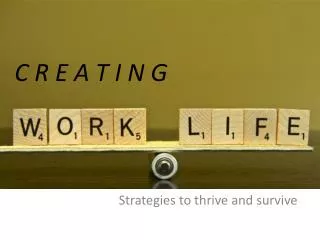
C R E A T I N G Strategies to thrive and survive
Pretext(family) Support (environment) Context (work) Resilience building Coping mechanisms (survival) Recovery: bounce back (thriving)
Rates of divorce Communication workers 0% Agricultural engineers 2% Dentists 3% Optometrists 4% Clergy 6% Sales engineers 7% Podiatrists 7% Nuclear engineers 7% Waitress 23% Housekeeping 26% Entertainers 29% Nurses 30% Gaming services 32% Sports stars 35% Massage therapist 39% Dancers 43% police force 14.5% Pre-stress SOURCE: Shawn P McCoy, Michael G Aamodt, “A Comparison of Law Enforcement Divorce rates with those of other occupations,” Journal of Police and Criminal Psychology, 2010
Military service Commercial pilots Firefighters War photojournalists Police force SES emergency response Ambulance drivers Senior executives Taxi drivers Stress
SOURCE: Ellen Goldbaum, “Police Officer Stress Creates Significant Health Issues,” Department of Medicine, University of Buffalo, NY, July 9, 2012 Stress Professor John Violanti, University of Buffalo, NY
SOURCE: Yareni Farinas, “Law Enforcement Officers More Likely to Suffer from Heart Disease,” July 8, 2013, WCJB News (a subsidiary of ABC).
Pretext(family) Support (environment) Context (work) Resilience building Coping mechanisms (survival) Recovery: bounce back (thriving)
Physical SOURCE: Australian Bureau of Statistics, “Causes of Death” Report, 2010
Mental SOURCE: Lifeline Australia, quoting ABS “Causes of Death” Report, 2009.
Emotional SOURCE: The Black Dog Institute, “Facts and Figures about Mental Health and Mood Disorders,” October 2012.
Ideal self Experience of self inconguent Spiritual
Physical SOURCE: www.myfavouritemedicine.comDr. Mike Evans, Professor of Family Medicine at the University of Toronto
Confidant: /ˈkɒn-fɪ-dɑːnt/ n. a person with whom one shares a secret. A trusted friend Relational