Download
1 / 8
80 likes | 220 Vues
In France, renewable energy is gaining traction as an alternative to coal and nuclear energy. Key sources include sunlight, wind, hydropower, and geothermal energy, which are not derived from fossil fuels. This chapter delves into various forms of renewable energy such as passive solar heating and photovoltaic systems, highlighting their benefits and limitations. With innovative technologies like solar ovens and sun-tracking power towers, the potential of converting solar energy into electricity is immense. Understanding these alternatives is crucial as we adapt to a future with diminishing oil supplies.

E N D
Renewable • Sunlight, wind, falling H2O, geothermal • Not fossil fuels, not nuclear
Indirect Solar power • How does it affect… • Wind? • Hydropower? • Firewood? • Hydro carbon fuels? • Nuclear and Geothermal are not indirect solar
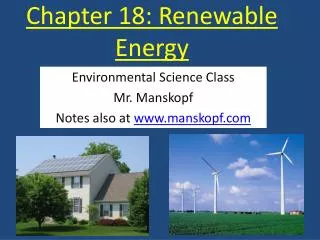
Passive Solar Heating • Large south-facing windows, heavy drapes to trap heat at night, interior bricks to trap heat • Shade windows in summer • Even though back up systems are required, and solar heating may only lessen the need for heating oil a few %, it will help us adapt to diminishing oil supplies.
Photovoltaics • Active solar energy • Photovoltaic (PV) panels can be used to convert the energy from the sun into electricty. • “Every hour enough solar energy reaches the Earth to meet the world's energy demand for a whole year." • http://www.eere.energy.gov/solar/video/pv3.mov
Did you know that… • Power towers are sun tracking mirrors used to focus sunlight on a central boiler • You can cook food in a solar oven • CH4 (methane) results from digesting manure anaerobically • Alcohol results from fermenting sugars or starch anaerobically