Effects of PTEN Expression and Rapamycin on Phosphorylated S6 Kinase in PC-3 Cells
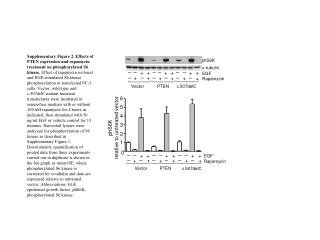
This study examines the impact of PTEN expression and rapamycin treatment on phosphorylated S6 kinase levels in transfected PC-3 cells. Cells were incubated in serum-free medium with or without rapamycin before stimulation with EGF. The phosphorylated S6 kinase levels were analyzed through densitometric quantification of data from multiple experiments, presented relative to untreated vector controls. Results elucidate the roles of PTEN and rapamycin in regulating S6 kinase phosphorylation, contributing to our understanding of cell signaling pathways in cancer.

Effects of PTEN Expression and Rapamycin on Phosphorylated S6 Kinase in PC-3 Cells
E N D
Presentation Transcript
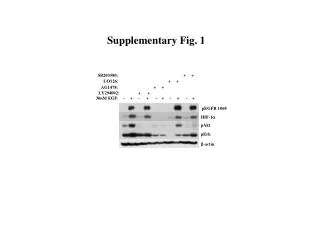
phS6K -tubulin + + + + + + EGF Rapamycin + + + + + + Vector PTEN c.507delC EGF Rapamycin 6 5 4 phS6K relative to untreated vector 3 2 1 0 + + + + + + + + + + + + Vector PTEN c.507delC Supplementary Figure 2. Effects of PTEN expression and rapamycin treatment on phosphorylated S6 kinase. Effect of rapamycin on basal and EGF-stimulated S6 kinase phosphorylation in transfected PC-3 cells. Vector, wild-type and c.507delC mutant transient transfectants were incubated in serum-free medium with or without 100 nM rapamycin for 4 hours as indicated, then stimulated with 50 ng/ml EGF or vehicle control for 15 minutes. Harvested lysates were analyzed for phosphorylation of S6 kinase as described in Supplementary Figure 1. Densitometric quantification of pooled data from three experiments carried out in duplicate is shown in the bar graph as mean±SE, where phosphorylated S6 kinase is corrected for a-tubulin and data are expressed relative to untreated vector. Abbreviations: EGF, epidermal growth factor; phS6K, phosphorylated S6 kinase.