SWEETENERS
SWEETENERS. Desserts for Special Occasions. A CARBOHYDRATE = A CARBOHYDRATE = A CARBOHYDRATE. USE OF SUGAR IN THE MEAL PLAN. Can be used in moderation Substitute for other carbohydrate in the meal Monitor blood glucose effect Watch fat content. SUGAR OR ARTIFICIAL SWEETENERS.


SWEETENERS
E N D
Presentation Transcript
SWEETENERS Desserts for Special Occasions
A CARBOHYDRATE = A CARBOHYDRATE = A CARBOHYDRATE
USE OF SUGAR IN THE MEAL PLAN • Can be used in moderation • Substitute for other carbohydrate in the meal • Monitor blood glucose effect • Watch fat content
SUGAR OR ARTIFICIAL SWEETENERS • Sugar provides volume, texture, color, moistness • Artificial sweeteners are only sweet
SWEETENERS • Nutritive (sugar - contain calories) • Non-nutritive (artificial - no calories)
NUTRITIVE SWEETENERS • Sugars • Sucrose, fructose • Sugar Alcohols • Sorbitol Mannitol Xylitol • Maltitol Lactitol Isomalt • Hydrogenated Starch Hydrolysate
USE OF SUGAR ALCOHOLS • Compared to sugar: • Less calories • Similar bulk and texture • Less sweet • May have laxative effect
NON-NUTRITIVE SWEETENERS • Saccharin • Aspartame • Acesulfame-K • Sucralose
NON-NUTRITIVE SWEETENERS • Intense sweetness • 180-600 times sweeter than sugar • Safe • Used for calorie control and blood glucose control
SAFETY OF NON-NUTRITIVE SWEETENERS • Can be used by pregnant women (saccharin not best choice) • ADI (acceptable daily intake) - amount that can be safely consumed over lifetime • Aspartame - ADI = 50 mg/kg • Acesulfame K - ADI = 15 mg/kg • Saccharin - limit to 500 mg children and 1000 mg adults
USE OF NON-NUTRITIVE SWEETNERS IN COOKING • Best in beverages, pudding, salad dressings, sauces, pies and frozen desserts • For most baked goods, do not replace more than 1/2 cup of sugar
SACCHARIN • 300 times sweeter than sugar • Acidic ingredients reduce bitter aftertaste • Limit 1000 mg/d = 24 packets • 500 mg/d = 12 packets
ASPARTAME • 200 times sweeter than sugar • Little aftertaste • Loses sweetness with storage and heat • Available in many brand names
TO INCREASE STABILITY OF ASPARTAME: • Combine with other sweetener • Add acidic ingredient • Add to food after cooking
ASPARTAME • Breaks down to: • Aspartic Acid • Phenylalanine • Methanol • 1 cup milk = 6 times phenylalanine and 13 times aspartic acid of 1 cup diet soda • 1 cup tomato juice = 6 times methanol of 1 cup diet soda
ACESULFAME - K • 200 times sweeter than sugar • Slight aftertaste in large amounts • Stable in cooking and baking • Brand name Sunette • Table top sweeteners: Sweet-One, Swiss-Sweet
ACESULFAME-K Reduce proportion of acesulfame-K as amount increases in recipeto reduce aftertaste
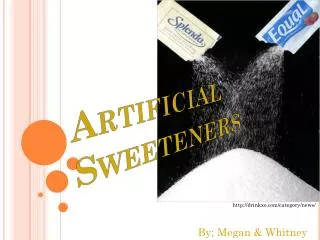
SUCRALOSE • 600 times sweeter than sugar • Made from sugar • Stable and safe • Marketed as Splenda brand • available in packets or granular • available in wide range of commercial products