
SlideServe
Menu
Préférences
© SlideServe · v2026

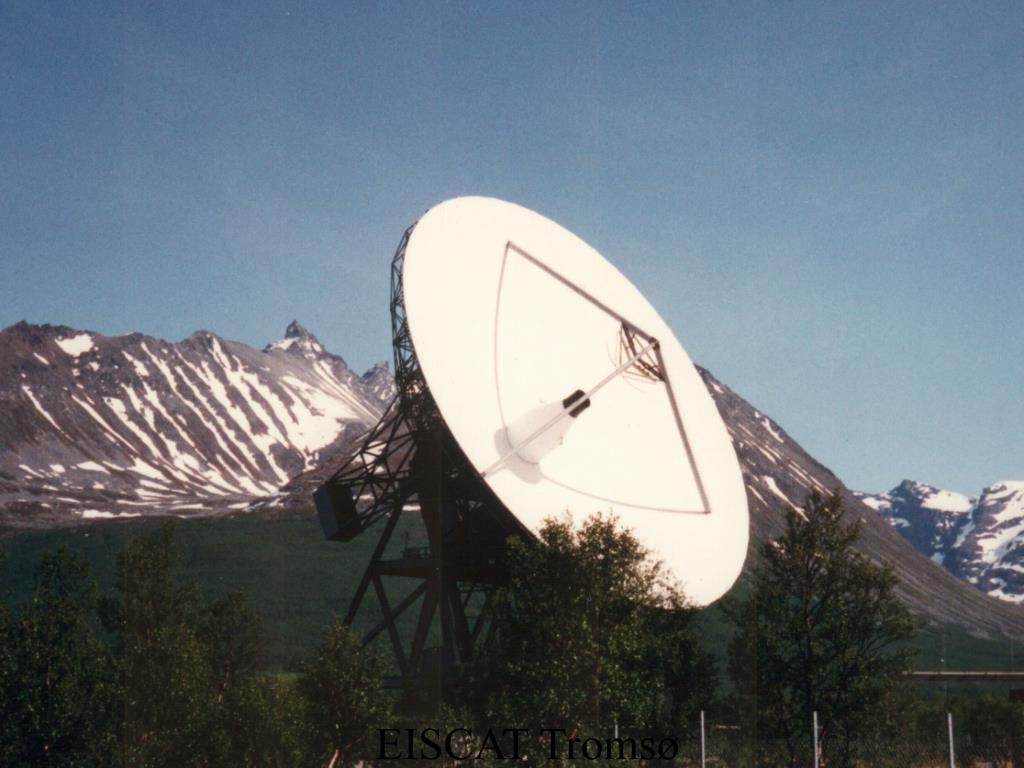
EISCAT Tromsø

jameson-carlson avatar
37 diapositives · 578 Views · Oct 31, 2014

EISCAT Tromsø. Progress in Interplanetary Scintillation Bill Coles, University of California at San Diego A. The Solar Wind: B. Radio Scattering: C. Observations: D. Recent progress:. Helmet streamers. Eclipse in White Light - HAO - Feb. 16, 1980 - India. Typical of Solar Maximum.
EISCAT Tromsø - slide 1
01 / 37EISCAT Tromsø
1 / 17

Télécharger la présentation

EISCAT Tromsø
Une image / un lien ci-dessous est fourni (tel quel) pour télécharger la présentation

Politique de téléchargement : le contenu du site vous est fourni TEL QUEL pour votre information et votre usage personnel ; il ne peut être vendu, concédé sous licence ni partagé sur d’autres sites sans l’accord de son auteur.Le contenu vous est fourni TEL QUEL, pour votre information et votre usage personnel uniquement. Téléchargez la présentation en cliquant sur ce lien. Lors du téléchargement, si vous ne parvenez pas à télécharger une présentation, l’éditeur a peut-être supprimé le fichier de son serveur.Pendant le téléchargement, si vous ne parvenez pas à obtenir une présentation, le fichier a peut-être été supprimé par l’éditeur.

F I N

Plus de contenu associé

Transcription de la présentation
  1. EISCAT Tromsø

  2. Progress in Interplanetary Scintillation Bill Coles, University of California at San Diego A. The Solar Wind: B. Radio Scattering: C. Observations: D. Recent progress:

  3. Helmet streamers Eclipse in White Light - HAO - Feb. 16, 1980 - India Typical of Solar Maximum

  4. Coronal Hole Eclipse in White Light - HAO - March, 18 1988 Typical of Solar Minimum

  5. The Solar Wind The existence of the solar wind could have been inferred from the shape of helmet streamers. 2.It could also have been inferred from measurements of the aurora. 3. It was inferred from observations of the direction of the ionic comet-tails.

  6. Coronal hole Soft X-ray Telescope (SXT) on Yohkoh Satellite

  7. Mauna Loa Mk3 WLC and Yohkoh SXT Polar coronal holes

  8. The LASCO C2 Coronagraph at Solar Minimum Occulting Disc Sun Sun Grazing Comet

  9. Closeup of Loops from Trace

  10. Plan view of an ecliptic observation drifting intensity pattern drifting phase pattern incident plane wave receiving antennas Solar Wind  compact radio source baseline Sun angular spectrum of plane waves

  11. Radio Scattering Velocity Measurement Raw Time Series at 2 Antennas Auto and Cross Correlations

  12. Velocity Map typical of Solar Minimum

  13. 1990 1994 1991 1995 1992 1996 1993 1997

  14. Velocity vs Latitude over Solar Cycle UCSD Nagoya Dennison & Hewish, 1966 Hewish & Symonds, 1967 Solar Maximum

  15. VLA Observations of Angular Scattering r(s) = e-0.5 D(s)

  16. Anisotropy vs Solar Distance The vertical bars indicate variation not statistical error Model AR(R) of plasma expected AR(R) for radio wave

  17. Scale Dependence of Anisotropy Ulysses (polar) Helios (equatorial) Woo & Armstrong (mean) Paetzold & Bird (polar) VLA perp VLBA (polar) Harmon and Coles (mean) Grall et al., VLA par (polar)

  18. Manoharan obs Coles and Harmon tabulation from various sources

  19. Equatorial - no inner scale Polar - with inner scale Observed coherence scale

  20. These characteristics of the solar wind microstructure have been known for 20 years. They lead John Harmon to propose that the micro-structure was caused by obliquely propagating Alfven waves because these waves would satisfy all four of the properties discussed: They would cause radial elongation of the structure The elongation would decrease with distance The spectrum would be flatter than Kolmogorov The waves would damp at the ion inertial scale. The problem is that these waves would also cause the intensity diffraction pattern to move outwards with respect to the flow at the group velocity of the waves VA. For quite some time we did not think this was compatible with the observations. We now believe that the velocity observations are compatible with these waves.

  21. The Resolving Power of Long Baselines 80km 160 km 240 km

  22. VPAR = (520 - 1200 km/s) VPERP = 80 km/s 951021 at 11 Rs VPERP alone VPAR alone

  23. Cross Correlation of Intensity in Fast Wind 10 RS at VLBA -solar minimum -half the baselines shown -slow and fast peaks clear -best fit model not unique

  24. Cross Correlation of Intensity in Fast Wind 3 RS at VLBA

  25. Measured IPS Parallel Velocity Distribution upper envelope = VMODEL + VA theoretical model

  26. GMRT Imaging at 600 MHz. Position of 0854+201 on Aug 2 3 4

  27. Implication Variations in angular scattering are not obviously correlated with variations in density. Angular scattering is  a column integral of density2, whereas white light brightness is  a column integral of density. Apparently scattering near the Sun is dominated by small but dense structures which are invisible in white light because their contribution to integrated density is negligible, however they contribute to scattering because they contribute significantly to the integral of density2.