Joram's Reign: The Struggle for Spiritual Purity and Obedience in Israel
Joram, the son of Ahab, ascended to the throne of Israel during Jehoshaphat's reign in Judah, ruling for 12 years. Despite removing the sacred pillar of Baal, he failed to fully abandon the sins established by Jeroboam. This period highlights the struggle between spiritual posture and purity. What does it mean to truly follow God? Are we honoring our covenant with Him, or merely complying with conditions? This reflection invites us to examine our own lives—what remnants of our past do we cling to, and how do they affect our obedience and faithfulness?

Joram's Reign: The Struggle for Spiritual Purity and Obedience in Israel
E N D
Presentation Transcript
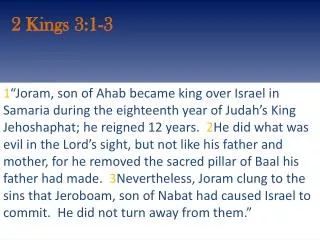
2 Kings 3:1-3 1“Joram, son of Ahab became king over Israel in Samaria during the eighteenth year of Judah’s King Jehoshaphat; he reigned 12 years. 2He did what was evil in the Lord’s sight, but not like his father and mother, for he removed the sacred pillar of Baal his father had made. 3Nevertheless, Joram clung to the sins that Jeroboam, son of Nabat had caused Israel to commit. He did not turn away from them.”
Stepping UpPart OneSpiritual Purity, Not Spiritual Posture Defining spiritual posture Defining spiritual purity
Stepping UpPart OneSpiritual Purity, Not Spiritual Posture Defining spiritual posture The principle of the “minimum” Superficial repentance Divided allegiance Defining spiritual purity Is my obedience defined by covenant, or condition? How honest am I about the sin in my life? What remnants of the old life do I still enjoy and embrace?