
100 likes | 213 Vues
Inherited disorders arise from genetic mutations passed down through generations, affecting individuals regardless of having normal-appearing parents. This overview discusses various recessively and dominantly inherited diseases, including albinism, Tay-Sachs disease, cystic fibrosis, and sickle-cell disease, alongside the role of genetic testing methods like amniocentesis and newborn blood tests. Recognizing these conditions helps in understanding their prevalence in different populations and highlights the importance of family pedigree tracking for health management.
E N D
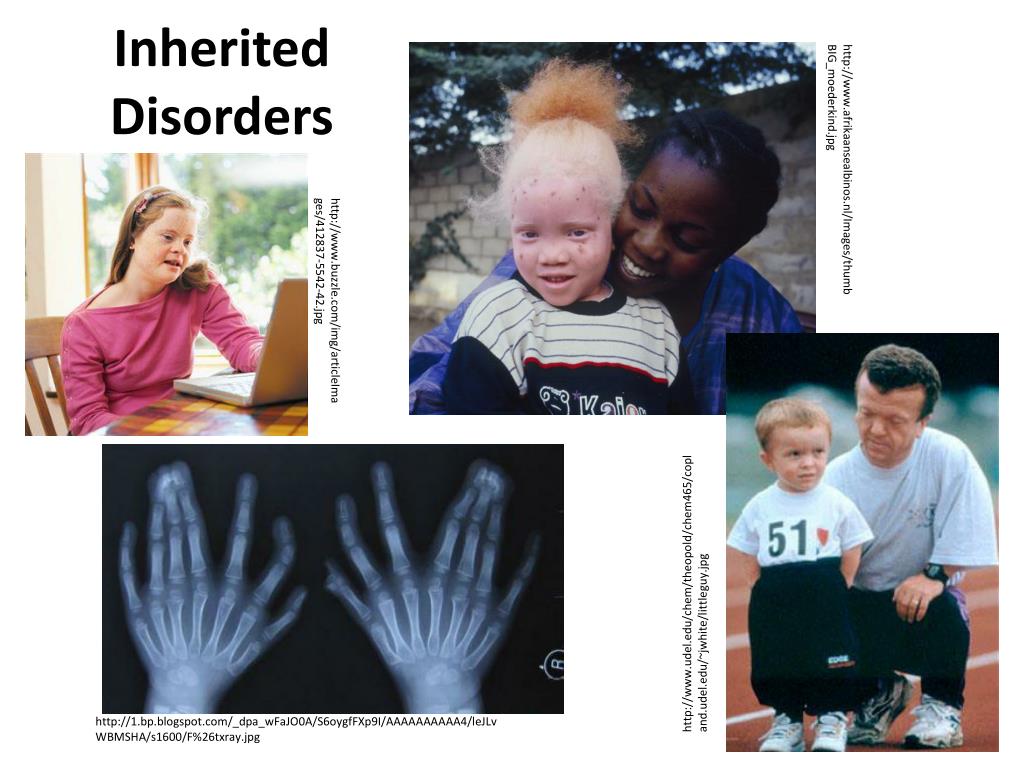
http://www.afrikaansealbinos.nl/Images/thumbBIG_moederkind.jpghttp://www.afrikaansealbinos.nl/Images/thumbBIG_moederkind.jpg Inherited Disorders http://www.buzzle.com/img/articleImages/412837-5542-42.jpg http://www.udel.edu/chem/theopold/chem465/copland.udel.edu/~jwhite/littleguy.jpg http://1.bp.blogspot.com/_dpa_wFaJO0A/S6oygfFXp9I/AAAAAAAAAA4/leJLvWBMSHA/s1600/F%26txray.jpg
Pedigree Offspring in birth order (1st born = left)
Recessively Inherited Diseases • Most people with recessive disorders are born to heterozygous parents (who are carriers of the disorder- but have a normal phenotype) • Albinism- 1:17,000; 1:70 carriers (higher rates in parts of Africa) • Tay-Sachs disease- brain cells cannot metabolize certain lipids; high in Ashkenazic Jew population • Cystic fibrosis- high concentration of extracellular chloride- causing mucus to develop on certain cells; 1:2500 people of European decent; 1:25 are carriers • Sickle-Cell Disease- hemoglobin molecules aggregate into long rods; 1:400 African Americans; 1:10 are carriers
Dominantly Inherited Disorders • Dominant alleles are NOT always more common in a population! • Achondroplasia (form of dwarfism);1:25,000 • Polydactyly- extra fingers/toes;1:400 • Huntington’s Disease- degenerative disease of the nervous system (no phenotypic effect until age35-45); 1:10,000
Testing • Track family pedigree • Amniocentesis (10mL of amniotic fluid taken beginning at 14-16 weeks) • Chorionic villus sampling (CVS)- sample of placenta taken as early as 8-10 weeks • Newborn blood tests
Chromosomal Disorders*Due to nondisjunction- chromosomes/chromatids do not behave normally in meiosis • Down syndrome(trisomy 21): The result of an extra copy of chromosome 21; 1:800 children • Klinefelter syndrome: 47, XXYmales. Male sex organs; unusually small testes, sterile, normal intelligence. • 47, XYY males: Individuals are somewhat taller than average and often have below normal intelligence. • Trisomy X: 47, XXX females. 1:1000 live births - healthy and fertile • Monosomy X (Turner's syndrome): 1:5000 live births; the only viable monosomy in humans - women with Turner's have only 45 chromosomes