Evolution and Future of the University Sports Centre: A Journey of Strategic Development
140 likes | 286 Vues
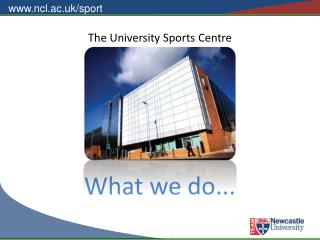
The history of the sports centre projects highlights the evolution from the 'Old Gym' and Munrow Sports Centre to today's ambitious plans. Over several decades, challenges such as space constraints, quality, and maintenance drove the need for a new facility. The revised vision and strategy for sport emphasize clear goals, community engagement, and financial sustainability. The project, backed by thorough market analysis and a robust business plan, aims to enhance the student experience while supporting sporting talent and performance, ensuring the university's reputation on both national and international stages.


Evolution and Future of the University Sports Centre: A Journey of Strategic Development
E N D
Presentation Transcript
History • ‘Old Gym’ and Munrow Sports Centre • Subsequent developments: 1970s, 1990s, 2000s • Growing constraints: • Size • Quality • Maintenance • Late 90s / early 2000s Plans
Current Project ~ History £m R R R V • Wish list • Phased • Existing / new site
= Frustration ! ! ! • Requires . . . . . • Persistence + Patience + Resilience • Clarity of Vision / Purpose • Beware those bearing gifts ! • Be ready to capitalise on the opportunities
Change of Climate • Revised Vision & Strategy for Sport • March 2009: Sport Summit • Senior Decision-makers • New VC / UEB + new Pro-Chancellor • Academic strategy for sport • University Strategic Plan • Sport’s role • Consistency with UBS strategy • Estate Masterplan / University Reserves • Student Fees , student experience critical • Sport the priority
UoB Investment Drivers Enhance recruitment (student & staff) Higher quality experience Support sporting talent & performance (BUCS ranking) Enhanced national & international reputation community engagement Improve long-term financial sustainability of sport Support teaching & research
Features of the Project • Clear vision & strategy for sport • Location, Location, Location
Features of the Project • Clear strategy & vision for sport • Location, Location, Location • Robust business plan • Constantly evolving • Independently reviewed • Market analysis (evidence base) • Facility mix/design matches market segmentation • Balance between participation & performance • Balance between student, staff, alumni & community • What market are we in ?
Facility Design • Architects • Client engagement • Knowledge & research • Visiting other facilities . . . . and managing colleagues’ views • Clear principles and facility brief (what & why) • Compromises ! • Maximum use of space, and flexibility • Compliance with SpEng ‘guidelines’ • Only one chance to get it right !
LIFE CYCLE COSTS ARE LOCKED IN EARLY Facility Design 100% determined cost 95% 85% 75% 70% knowledge of the design CUMULATIVE LIFE CYCLE COST 50% 50% incurred cost 25% 18% 7% 1% TIME conceptual design preliminary design detail design production product use
Business-Financial Plan • Good business proposition for University • £50m capital £1.5m pa saving on revenue • Includes all utility costs, maintenance & renewals • Excludes student club support • Key features: • Location (Campus-City-Region) • Size of university • Surrounding market • Market analysis / gaps • Delivers key outcomes for UoB
Fundraising • £5m • Partnership with DARO • Scepticism • Time demands • Proposition(s) • Capital (naming rights) v revenue • Building networks, identifying ‘champions’ • Breaking new ground for sport fundraising
Managing Change • Client engagement • User / community consultation • Short- and long-term planning • Consultation • Take the whole team on a journey, led by a clear vision • Engage the team from the outset ~ regular briefings • Bold leadership • Ownership / responsibility • New business / customer service culture • Not everyone will complete the journey
Learning Points • “ It will take over your life” !! ~ Spin many plates • Politics & people . . . . . . & opportunities • Manage expectations 360° • Tests out team / members • Excitement v anxiety about the future (new world) • Requires patience, persistence & resilience • Holding ground v compromise • Client/team engagement = responsibility for the outcome • Devil’s in the detail (166 RDSs !) • 2½ years to go