Optimizing Performance with the Energy Equation
Discover the importance of balancing energy intake and output through proper nutrition and exercise to enhance overall performance. Learn about calorie counting, basal metabolic rate, and how to estimate daily caloric needs. Find out how to calculate BMI and understand its limitations. Take control of your energy equation for a healthier lifestyle and improved well-being.

Optimizing Performance with the Energy Equation
E N D
Presentation Transcript
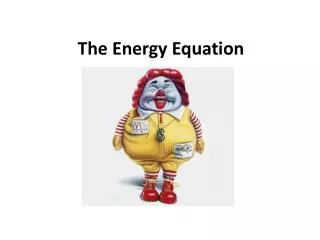
How do you eat well to optimize performance? By balancing the food we take in and the effort we put out (exercise) Energy Storage = Energy Intake – Energy Output
Counting Calories Calorie • Amount of heat needed to raise the temperature of 1 gram of water by 1°C • 1 kilocalorie (kcal) 1000 calories • Canada (metric system) • Uses joules (J) and kilojoules (kJ) to measure energy content in food • 1 calorie = 4.184 joules
Foods high in Calories = lots of energy • Not used up stored as fat OBESITY
Daily Caloric Need • Daily caloric need = Number of calories necessary to maintain one’s current body weight • Dependent on individual: • Size • Metabolism • Thermic effect of food • Physical activity level • Type of activity (body builder vs marathon runner)
Basal and Resting Metabolic Rate • Metabolism - Rate at which we burn energy • Thermal Regulation - Ability to manage heat produced in this process • Metabolic Rate - measures energy that needs to be consumed in order to sustain essential bodily functions (Energy you would expend if you did nothing at all)
Basal Metabolic Rate (BMR) • Measures metabolic rate under lab conditions • 12-14 hours after last meal with individual completely at rest with background temperature of 26-30°C • Resting Metabolic Rate (RMR) • Measures metabolic rate under less rigourous conditions • More common measure Both are used interchangeably!
What Affects Metabolic Rate? • Factors: Age, sex, weight, lean muscle mass and level of physical fitness • Increases with more muscle mass • Males have higher metabolic rate • Reduces with age • Increase with heavier people
RMR Calculations Males = 66.5 + (5 x H) + (15.7 x W) – (6.8 x A) = _____ calories/day Females = 665 + (1.9 x H) + (9.5 x W) – (4.7 x A) = _____ calories/day *H = height in cm, W = weight in kg, A = age
Estimating RMR • A quick way to estimate RMR is to find weight in pounds (lbs) and multiply it by 10 or 11 depending on your sex Males = multiply by 10 Females = multiply by 11 Example: If Yadong weighs 180 lbs then, his RMR (180 x 10) is approximately 1800 calories/day
Estimating Daily Caloric Need • BMR/RMR calculations help with baseline for weight control programs • Also helps give general guide to daily caloric need in sustaining current body weight • Sedentary person – RMR x 1.4 • Relatively active person – RMR x 1.6 • Highly active person – RMR x 1.8
Body Mass Index • Body mass index – assess how effective you are at balancing the energy equation • Tells you if you are underweight or overweight relative to your height Weight (Height)² *weight in kilograms and height in metres BMI =
BMI • BMI < 18.5 = underweight • BMI > 27 = overweight • BMI > 30 = obese
Limitations to BMI • BMI cannot distinguish fat vs excess muscle • Athletes in sports like weightlifting, wrestling and football would have high BMI and be considered “obese” under our BMI calculations