Surrealistic Visual Blending using 2D Morphing Techniques
Explore the intricate world of visual blending through 2D morphing, delving into surrealism and super realism in visual arts and animation. This study demonstrates the field morphing technique, its extensions, results, and future possibilities.

Surrealistic Visual Blending using 2D Morphing Techniques
E N D
Presentation Transcript
Visual Blending using 2D Morphing SK Semwal J Ohya* I Semwal B Bikker University of Colorado, Colorado Springs *ATR, Japan
Visual Surrealism • 1917 by Guillaume Apollinaire • Dream like quality • Super realism writing, verbally or any other means of thought • Extends to animation
Introduction • Images indistinguishable from reality: • Nadia Thanlmann (human forms) • Badler (Human forms) • Many examples from movies and films
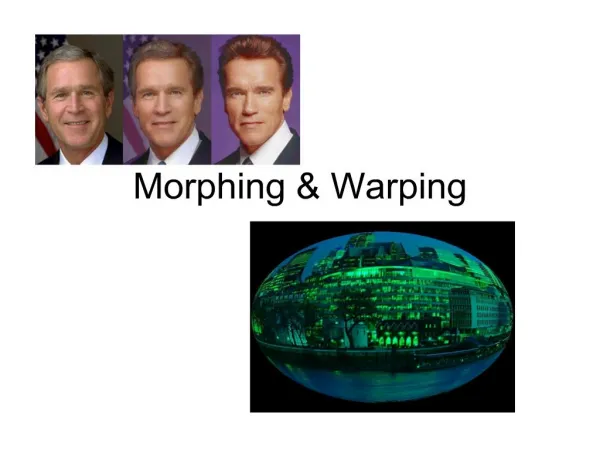
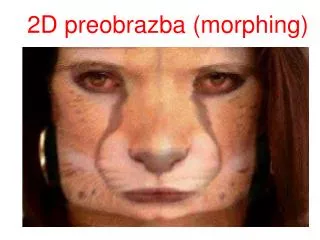
Motivation • 2D Morphing • Surrealism evident in Morphing (Willow) • Field Morphing technique
Extensions from Field Morphing • Multiple segments define an area which remains constant • Polygonal extents provides consistent morphing with ghosting reduction
Results • Precise timing can be achieve • Smoothing introduces “lag”
Summary • Results are more realistic as we can control some immovable parts during morphing • Multiple line segments and their choice determine the quality of animation
Future Work • Defining the areas automatically • Extensions to 3D during motion capture