Understanding Child Poverty in Springfield: Springfield KIDS COUNT 2010 Symposium
150 likes | 255 Vues
Explore the hidden impact of recession on children, the effects of unemployment, long-term consequences of child poverty, and key investments for Illinois children. Get informed about child poverty rates and the policy challenges to secure a better future for families.


Understanding Child Poverty in Springfield: Springfield KIDS COUNT 2010 Symposium
E N D
Presentation Transcript
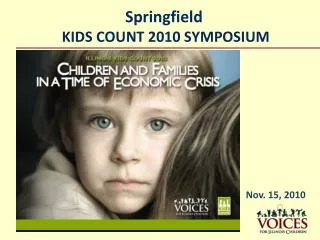
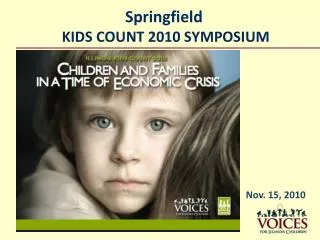
Springfield KIDS COUNT 2010 SYMPOSIUM Nov. 15, 2010
Introduction • The most visible signs of recession don’t reveal full impact on children • Children are hidden casualties of the economic crisis • Recessions have lasting effects on child poverty
Unemployment Rates 2008 2010 (12 mo.) (9 mo.) Illinois 6.5% 10.8% Sangamon County 5.8% 8.6% Springfield 5.9% 8.7%
Effects of Unemployment Children with unemployed parent: • 2007: 3.5 million nationwide • 2009: 7.2 million nationwide When parents lose a job, children are more likely to: • Struggle in school • Repeat a grade • Have behavior problems
Long-Term Effects of Child Poverty Children growing up in poverty are likely to have: • Lower levels of educational attainment • Diminished employment prospects • Greater health problems
Child Poverty in Illinois, 2009 • Children in poverty: 590,000 (530,000 in 2008) • Child poverty rates: • Illinois: 19% (2009); up from 17% in 2008 • Sangamon County: 18% (2008-09) • Springfield: 23% (2008-09)
Child Poverty Rates in Illinoisby Age, 2009 Under age 6 21% Ages 6-11 19% Ages 12-17 16%
Child Poverty Rates in Illinoisby Race/Ethnicity, 2008-09 White 9% Black 39% Latino 25%
Lasting Effects of Recession Poverty expected to continue rising even after economy begins to recover • Child poverty in U.S. projected to reach 24% in 2012 • Expected rate in Illinois: 22% (more than 650,000 children)
Supplemental Nutrition Assistance Program (formerly Food Stamps) • About half of SNAP recipients in Illinois are children • Total SNAP recipients in Illinois: • June 2008: 1.31 million • June 2010: 1.65 million (27% increase) • Food Stamps and federal EITC are the most effective programs in lifting children above poverty level
Homeless School-Age Children • Homeless students in Illinois public schools • 2006-07: 19,800 • 2008-09: 26,700 • Evidence that homelessness has become even worse since then
Key Investments for Illinois Children • Early childhood care and education • Health care coverage • Child care assistance for working families • Mental health services • Child welfare and prevention strategies Recession and state fiscal crisis put these investments in jeopardy
Securing the Future for Children and Families Policy challenges: • Protect families in need • Build on successful policies • Strengthen foundation for prosperous future
Illinois Kids Count 2010 Report View at www.voices4kids.org/library/kidscount.html
For more information Kathy Ryg President Voices for Illinois Children www.voices4kids.org 312-516-5550 kryg@voices4kids.org