Bureaucracy & Financing
130 likes | 255 Vues
This overview explores the structure and functions of bureaucracy within the U.S. federal government. It delves into the hierarchical nature, job specialization, and formal rules of executive departments led by secretaries forming the Cabinet. The Executive Office of the President aids in decision-making with trusted advisors. Additionally, the document covers various types of taxes, including progressive and regressive taxes, along with corporate taxes, income taxes, and federal spending strategies. Understanding these elements is crucial for comprehending government operations and fiscal policies.


Bureaucracy & Financing
E N D
Presentation Transcript
Bureaucracy • Bureaucracy: • Large, complex administrative structure which handles everyday business of the federal government • Hierarchical authority • Job Specialization • Formalized Rules
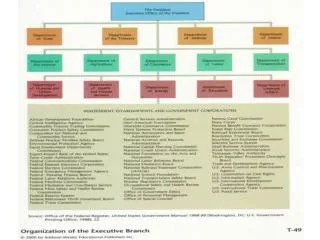
Executive Departments • Each Department headed by a Secretary • Cabinet • Informal advisory board to the President • Traditionally made up of heads of 15 executive departments • Departments of State, Justice, Defense, Education, Treasury, etc.
Executive Office of the President • The EOP is staffed by the President’s most trusted advisors • White House Office • “Nerve Center” • Chief of Staff, Press Secretary, assistants to President • National Security Council • Advises President on domestic, foreign, and military issues that relate to security • VP, Secretary of State, Secretary of Defense, head of CIA & FBI
Independent Agencies • Independent Agencies – Created outside the Executive branch • Do not fit well within departments • Independent Executive Agencies • NASA, EPA, etc. • Independent Regulatory Commissions • The Fed, etc. • Government Corporations • FDIC, US Postal Service, etc.
Types of Taxes • Progressive Taxes • Tax increases based on an individual’s ability to pay • Corporate Taxes – pay according to its profit for year • Income Taxes – #1 source of revenue • http://www.moneychimp.com/features/tax_brackets.htm • Tax Return – declaration of income & deductions - IRS by April 15th
Types of Taxes • Regressive Taxes • Taxes levied at a flat rate without regard to the level of a taxpayer’s income or ability to pay • Sales tax – 8.25%
Types of Taxes • Excise • Taxes on the production, sale, or consumption of specific goods • “Luxury” or “Sin” taxes • Airline tickets, tires, firearms, tobacco, beer, gambling
Types of Taxes • Estate taxes (Death taxes) • Paid according to a person’s wealth, land, estate at their death • Gift taxes • Tax gifts over $12,000 a year (to keep people from giving away estate)
Federal Spending • Each branch within the government receives a portion • Executive Departments spend the most • President submits a budget to Congress each year for approval • Must be approved by whole Congress