US Economic Imperialism
This exploration delves into the complexities of U.S. economic imperialism in Latin America, highlighting the uneasy colonial legacy that shaped political instability. As caudillos maintained power and the wealthy elite controlled the economy, Latin America remained unindustrialized despite a growing economy dependent on exports. The Monroe Doctrine and Roosevelt Corollary further solidified U.S. dominance, with military interventions in Cuba and Panama demonstrating America's role as an international police power. The consequences of these actions continue to echo in contemporary Latin American politics.

US Economic Imperialism
E N D
Presentation Transcript
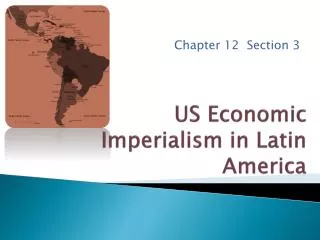
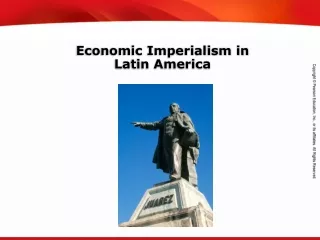
Latin America • Colonial Legacy • Political Instability • Caudillos still asserted their power • Power remained with the wealthy • Economy Grows • Depended on exports • Railroads and refrigerators increased Latin American trade • Still imported manufactured goods…remained unindustrialized!!!!
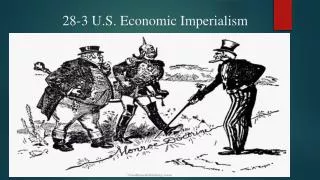
Don’t Do It • The Monroe Doctrine • No more colonizing or conquering • Cuba declares Independence • 1868 declared independence, fought Spain for ten years • Jose Marti • Writer who fought in favor of independence
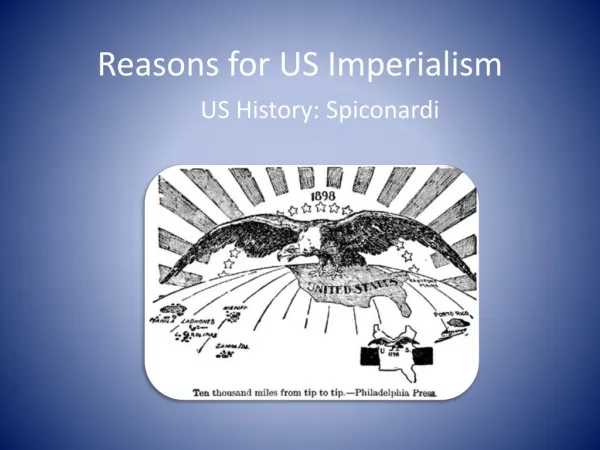
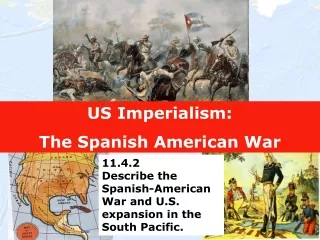
Baa BOOOM!!! • Spanish American War • Lasted four months • Attacked the Philippines, Spanish collapsed • 1901, Cuba became independent • US set up a military government and controlled Cuban affairs • Spain turned over Puerto Rico, Guam, and the Philippines to the United States
Panama Canal • Panama was a province of Columbia • US offered 10 million plus yearly fee to build a canal, Columbians wanted more • US urged Panamanians to revolt, of course with US Naval help • 10 mile wide zone was given to the US for helping Panama gain independence • Panama Canal opened in 1914, crossroads to the world, US controlled the gate
Roosevelt • US had many interests in Latin America • 1904, Roosevelt Corollary • Allowed the US to be an international police power in the west • Faced tension and protest