Download
1 / 1
10 likes | 122 Vues
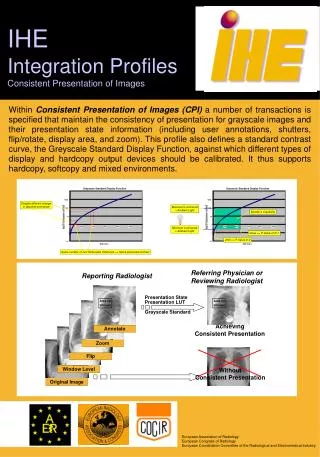
This document discusses achieving consistent presentation of grayscale images in medical settings, despite variations in absolute luminance. The key focus is on the Grayscale Standard Display Function, which defines a standard contrast curve essential for calibrating different display types and hardcopy outputs. It emphasizes the importance of maintaining consistent grayscale presentation, which includes user annotations, display adjustments, and the interplay of ambient light with monitor capabilities. This is vital for radiologists to ensure accurate image interpretation and reporting.

E N D
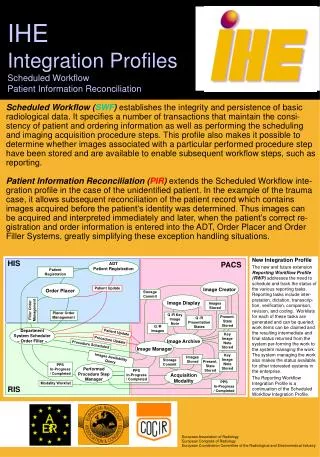
Area Of Interest Area Of Interest Grayscale Standard Display Function Grayscale Standard Display Function Despite different change in absolute luminance 1000 1000 Achieving Consistent Presentation Flip Maximum Luminance + Ambient Light 100 100 Monitor’s Capability Zoom 10 10 Annotate 1 1 0 200 400 600 800 1000 Minimum Luminance + Ambient Light 0 200 400 600 800 1000 Original Image Without Consistent Presentation Window Level Jmax == P-Value of 2n-1 .1 .1 Jmin == P-Value of 0 .01 .01 JND Index JND Index Same number of Just Noticeable Difference == Same perceived contrast Referring Physician or Reviewing Radiologist Reporting Radiologist Presentation State Presentation LUT Grayscale Standard IHEIntegration ProfilesConsistent Presentation of Images Within Consistent Presentation of Images (CPI) a number of transactions is specified that maintain the consistency of presentation for grayscale images and their presentation state information (including user annotations, shutters, flip/rotate, display area, and zoom). This profile also defines a standard contrast curve, the Greyscale Standard Display Function, against which different types of display and hardcopy output devices should be calibrated. It thus supports hardcopy, softcopy and mixed environments.