Comprehensive Guide to Infection Control Measures
240 likes | 264 Vues
Learn about infectious diseases, precautions, and psychological implications while providing sensory stimulation and nursing implications. Understand the gerontologic considerations for preventing infections in older adults.


Comprehensive Guide to Infection Control Measures
E N D
Presentation Transcript
Chapter 22 Infection Control
Infection Control • Infectious diseases • Contagious or communicable diseases and community-acquired infections • Persistence of infectious diseases • The current public health problem of AIDS, HIV, and SARS
Infection • Infection: condition that results when MOs cause injury to a host • Colonization: condition that results when microbes are present but host is without signs or symptoms of infection • Progress of infections through distinct stages
Infection Control Precautions • Infection control precautions: physical measures designed to curtail the spread of infectious diseases
Infection Control Precautions (cont’d) • Standardprecautions • Standard precautions reduce transmission of MOs from both recognized and unrecognized sources • Followed when potential exists for contact with blood, all body fluids except sweat, nonintact skin, mucous membranes
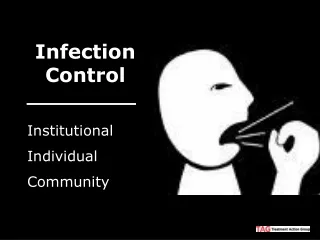
New Standard Precaution Recommendation • Respiratory Hygiene/ Cough etiquette • Control precautions for special Lumbar Procedures
Infection Control Precautions (cont’d) • Transmission-based precautions • Airborne • Droplet • Contact
Infection Control Measures • Personal protective equipment • The purpose and characteristics of cover gowns • Face-protection devices • Gloves
Infection Control Measures (cont’d) • Personal protective equipment (cont’d) • Removing personal protective equipment • Disposing of contaminated linen, equipment, and supplies • Double bagging
Infection Control Measures (cont’d) • Client environment • Infection control room • Equipment and supplies • Methods of discarding biodegradable trash • Removing reusable items • Delivering laboratory specimens • Transporting clients with infectious diseases
Psychological Implications • Being attentive to client sensibilities • Promoting social interaction • Combating sensory deprivation
Nursing Implications • Frequently identified nursing diagnoses when caring for clients with infectious diseases • The nursing diagnosis of risk for infection transmission • Imparting of infection prevention teaching measures to client and family
General Gerontologic Considerations • Susceptibility to infections among older clients due to decreased immune system function and inadequate fluid/nutrition intake • Subtler symptoms of infections among older adults • Infections more likely to have a rapid course and life-threatening consequences once established
General Gerontologic Considerations (cont’d) • Change in behavior and mental status can signal infectious process • The high incidence of TB among older adults, especially those in long-term care • Maintaining intact skin is excellent first-line defense against nosocomial infections • Prompt perineal hygiene is best technique for preventing urinary tract infections