Healthy Meal Planning Guide
340 likes | 529 Vues
This guide emphasizes the importance of following American Dietary Guidelines and My Plate, maintaining nutritional balance, and incorporating aesthetic guidelines to create appealing and healthy meals. It discusses recommendations for the Fruit and Vegetable, Grain, Proteins, and Dairy Groups, along with the significance of color, texture, size and shape, flavor, temperature, and method of preparation in meal planning. By considering these factors, you can ensure your meals are both nutritious and visually appealing.


Healthy Meal Planning Guide
E N D
Presentation Transcript
A good meal will: • Follow the American Dietary Guidelines • Follow My Plate • Maintain nutritional balance • Incorporate aesthetic guidelines
American Dietary Guidelines • Eat nutrient dense foods • Maintain a healthy weight • Choose foods low in fat • Choose foods low in salt/sodium • Choose foods low in sugar • Eat plenty of fruits, vegetables, and whole grains • Drink plenty of water
My Plate • My Plate is a tool designed to help Americans visualize a healthy plate • At every meal, your plate should consist of • 20% fruits • 30% vegetables • 30% grains • 20% protein • 1 cup dairy
Fruit and Vegetable Group • What are the recommendations? • Use a variety • Raw or cooked • Crisp or soft textures • Strong or sweet flavor • Brightens a meal with color • Vegetables used in salads, casseroles, stews, soups • Fruits used in juices, raw, desserts
Grain Group • What are the recommendations? • Breakfast • Toast, muffins, pancakes or grits • Cereal; cooked or ready to eat • Lunch and Dinner • Macaroni, spaghetti, noodles, rice • Breads, rolls, biscuits
Proteins Group • What are the recommendations? • Usually appear as the main dish • Meat found in soups, stews, casseroles or sandwiches. • Eggs used in custards and baked goods count as well.
Dairy Group • What are the recommendations? • Served as a beverage • Included in cereals, soups, main dishes, custards, puddings, baked goods. • Cubed or sliced cheese • Ice cream or yogurt
What’s Wrong with this meal according to My Plate? • Breakfast • Milk • Cornflakes with sliced banana • Toast
What’s Wrong with this meal according to My Plate? • Lunch • Chili • Crackers • Apple • Water
What’s Wrong with this meal according to My Plate? • Dinner • Hamburger • French fries • Vanilla Shake
Nutritional Balance • Meals should be planned for nutritional balance, appeal, and suitability to various individual circumstances.
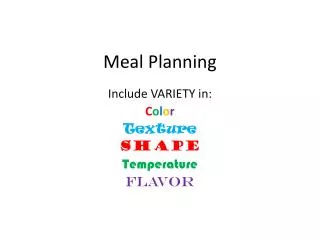
Color • Texture • Size and Shape • Flavor • Temperature • Method of Preparation Aesthetic Qualities
#1: Color • Many colors of foods are available • Too many foods of the same color offer no contrast or variation • Clashing or unpleasant color schemes can make you lose your appetite
#2: Texture • Can be seen and felt when consuming foods • Hard, chewy, crunchy, soft, solid, crisp, smooth, sticky, dry, moist, gritty, tough • Variety of textures adds interest • Common error in planning meals is the lack of variety in texture
#3: Size and Shape • Size as well as shape of food affects how appetizing food looks • Choose foods with various shapes and sizes • Avoid serving several foods made of small pieces • Avoid too many similar shapes
#4: Flavor • Use a variety of flavors – sweet, sour, bitter, salty, etc • Smell is also important to tell small differences • Avoid using foods with similar flavors in one meal
#5: Temperature • Meals are more interesting if some hot and some cold foods are served • The temperature outside should be considered when meal planning • Hot foods should be served hot and cold foods should be served cold
#6: Method of Preparation • Meals are more interesting if prepared in a variety of different ways • Avoid meals with no main dish or more than one main dish
Summary • When planning a meal don’t forget these main points: • Follow the American Dietary Guidelines • Follow My Plate • Maintain nutritional balance • Incorporate aesthetic guidelines