Ancient Rome
Explore the fascinating origins of Rome, from the legendary tale of Romulus and Remus to the establishment of the Roman Republic and the expansion of its empire. Learn about key events such as the Punic Wars and the rise of Julius Caesar, leading to the transition from the Republic to the Empire.

Ancient Rome
E N D
Presentation Transcript
500 B.C.-A.D. 500 Ancient Rome
Origins of Rome • Greece in decline-Rome starting to rise • Legend-Romulus and Remus • Twins raised by a she-wolf-built city • Rolling hills and center of Italian peninsula • Midpoint of Mediterranean Sea • First Romans • Latins, Greeks, Etruscans • Latins-Palatine Hill-First Romans • Greeks- southern Italy and Sicily-prosperous and commercially active • Etruscans-Northern Italy-Alphabet and architecture
Early Republic • 600-509 BC-kings • Tarquin the Proud-never again have a king • Republic-power with citizens who can vote • Same as Greece-only free-born male citizens • Patricians (wealthy landowners) vs. plebeians (commoners) • Patricians got most power (born into it) • Plebeians-get elected representatives (tribunes)-go against unfair acts of patricians
Another Legal Code • Twelve Tables-new legal code in 451 BC • Before this, laws were unwritten-patricians altered the laws for their benefit • Laws carved on 12 tablets • Posted for everyone to see • Basis for Roman Law • Idea all free citizens protected under it
Government in Early Republic • Consuls (2) • Like Kings but limited to one year-could be vetoed by other one • Senate (300) • Great influence, aristocratic • Chosen from upper branches • Tribal Assembly-Plebeians-democratic • Made laws for common people • Dictator could be elected in time of crisis-only to serve for 6 months
Roman Army • Great Emphasis on Military • All citizens who owned land required to serve • Organized into legions • Both infantry (on foot) and Calvary (on horseback) • Army as key to Rome’s rise to greatness
Rome Spreads Power • Expand through trade and conquest • 265 BC-nearly all Italy • Latins on Tiber-full citizens • Others-citizens without vote • Last group-allies-supplied troops for Roman army • Did not interfere with allies if they did this • Power moves beyond Italy
The Punic Wars • Rome’s empire relied on access to Mediterranean-Carthage interfering • 264 BC-Rome and Carthage at War • 3 Punic Wars 264 BC-146 BC • First Punic War-control of Sicily and Western Mediterranean • Defeat of Carthage • Second Punic War-rise of Hannibal • 50,000 infantry, 9,000 cavalry, and 60 elephants to capture Rome • Marched his men up and down Mediterranean through the Alps • Worked originally-victory at Cannae-enormous loses on Romans
The Triumph • Romans regrouped after Cannae and prevented Hannibal from capturing Rome • General Scipio-plan forced Hannibal to return to Carthage • Defeat Hannibal at Zama • Third Punic War (shortest)-Rome laid siege to Carthage • City set afire and its inhabitants sold into slavery • Victory in Punic Wars=dominance over Western Mediterranean • Got eastern half shortly after
Collapse of Republic • Gap between rich and poor too great • Enslaved population huge • Small farmers no match for big estates-many became homeless and jobless • Tiberius and Gaius Gracchus-reforms for poor as tribunes • Limiting size of estates and giving land to poor • Great enemies-violent deaths • Deaths led to civil war • Military unfaithful • Generals seized power for self • Had no loyalty to the republic-only money and power
Julius Caesar Comes to Power • Julius Caesarjoins with Crassus and Pompey • Julius Caesar as consul-3 ruled as triumvirate • Consul (only one year) then governor of Gaul • Military genius-led legions to conquer all of Gaul • Very popular to the people-feared by Senate • Told to disband his legions and return home-refuses • Defeated Pompey’s armies • Comes back to Rome-dictator for life (44 BC)
Caesar and Reforms • Dictator with total control • Extension of Roman citizenship to many provinces • Extension of Senate • Closed gap between rich and poor • Job creation and property • For Senators and Nobles-too much power support, etc. • Brutus and Gaius Cassius-assaination
Beginning of Empire • Republic officially done after Julius death-civil war • Second Triumvirate • Octavian (Caesar’s grandnephew), Mark Antony, Lepidus • Ruled for 10 years-like first-jealousy, violence, etc. • Mark Antony and Cleopatra join forces-fight Octavian • Octavian wins-become emperor-Augustus “exalted one”
Growth of Empire • 27 BC-AD 180-peak of power • PaxRomana-Roman Peace • 60-80 million people, 3 million square miles • 1 million in Rome alone • Augustus very good leader • Set up civil service-paid workers to manage affairs of government • At death-system established sets up stability in empire • Agriculture most important industry • Vast trading network-wealthy cities on Mediterranean • Trade and roads connected Rome to provinces and other places
Roman World Society • Importance of gravitas-discipline, strength and loyalty • Very practical qualities • Diverse Society-most people small farmers • Slavery crucial • Harsh system-slaves as property • Most worked hard labor-others forced to be gladiators • Huge numbers-more than a million lost their lives trying to gain freedom
Century of Crisis-Economic Troubles • Marcus Aurelius (161-180 AD) end of PaxRomana • Many problems that came • Hostile tribes and pirates disrupted trade • Expanded as far as could-had to raise taxes • Minted more money with less silver • Issue: inflation-create too much money • Agriculture lessened-soil had been overworked and destroyed in war • Food shortages and disease spread Population dropped
Military and Political Issues • Less disciplined and loyal soldiers • Lack of gravitas • Gave allegiance to commanders • Forced to hire mercenaries-no loyalty to Roman empire • Citizens lost patriotism • Did not care if empire fell
Empire Stays Alive • Empire stays alive for awhile • Diocletian (284 AD)-limited personal freedom • Restored empire by doubling the army and setting fixed prices • Presented himself as descended from the gods • Division of empire his most significant reform • Greek-speaking East and Latin-speaking West
Constantine’s Rise to Power • Diocletian retired-4 rivals competed for his throne • Constantine won out-gained control of West and East-single ruler • Moved capital from Rome to Byzantium (Turkey) • Strategic location between East and West • Renamed Constantinople-modeled after Rome
End of the Western Empire • Constantine dies- empire divided-East survives • Germanic people lived in peace for several years with Romans • Huns come in and destroy everything-Germanic people began to invade Rome • Huns became direct threat-Atilla as leader destroyed and plundered East • 476-Romulus Augustus ousted by Germanic people-no more Western ruler • Byzantine and East flourished
Legacy of Greco-Roman Civilization • Romans admired Greek culture • Greco-Roman Culture • Classical Civilization • Roman Fine Arts • Rome-realistic stone • Mosaics • Paintings in Pompeii • Learning and Literature • Virgil and Aeneid-Homer • Prose- Livy & Tacitus
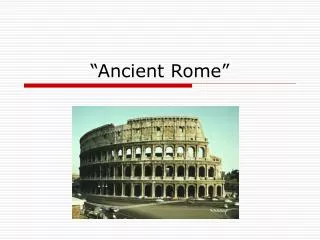
Legacy of Rome • Latin Language • Official language of Church until 20th century • Base for Romance languages • Roman Architecture • Coliseum • Aqueducts and bridges • Roads • Law • Rights of citizens • Basis of many modern legal systems • Rome as a bastion of Western civilization