
SlideServe
Menu
Préférences
© SlideServe · v2026

Six-Kingdom Classification

jock avatar
9 diapositives · 703 Views · Jul 30, 2014

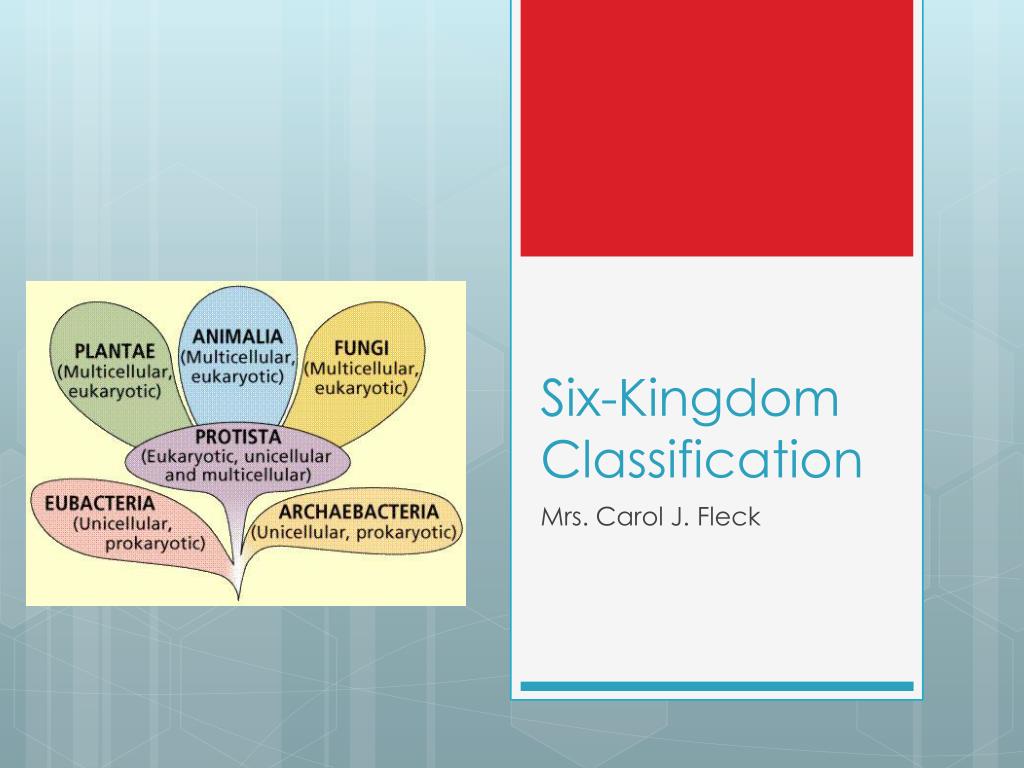
Six-Kingdom Classification. Mrs. Carol J. Fleck. Classification. Aristotle first classified organisms as either plants or animals…. This was good until…and by air, land and water There are forms of life that do not fit into those categories!!!
Six-Kingdom Classification - slide 1
01 / 9Six-Kingdom Classification
1 / 17

Télécharger la présentation

Six-Kingdom Classification
Une image / un lien ci-dessous est fourni (tel quel) pour télécharger la présentation

Politique de téléchargement : le contenu du site vous est fourni TEL QUEL pour votre information et votre usage personnel ; il ne peut être vendu, concédé sous licence ni partagé sur d’autres sites sans l’accord de son auteur.Le contenu vous est fourni TEL QUEL, pour votre information et votre usage personnel uniquement. Téléchargez la présentation en cliquant sur ce lien. Lors du téléchargement, si vous ne parvenez pas à télécharger une présentation, l’éditeur a peut-être supprimé le fichier de son serveur.Pendant le téléchargement, si vous ne parvenez pas à obtenir une présentation, le fichier a peut-être été supprimé par l’éditeur.

F I N

Plus de contenu associé

Transcription de la présentation
  1. Six-Kingdom Classification Mrs. Carol J. Fleck

  2. Classification • Aristotle first classified organisms as either plants or animals…. This was good until…and by air, land and water • There are forms of life that do not fit into those categories!!! • Currently, we use the six-Kingdom classification system.. • *** use to be 5, but we separated Eubacteria and Archaebacteria…Why?

  3. The Six Kingdoms • Archaebacteria • Eubacteria • Protista • Fungi • Plantae • Animalia

  4. Archaebacteria • Unicellular prokaryotes. • Do not have a nucleus • Live in Harsh environments. • Reproduce Binary Fission

  5. Eubacteria • Unicellular Prokaryotes • Do not have a nucleus • The bacteria around us • Can be good and bad…how??? • Reproduce Binary Fission

  6. Protista • Most are unicellular eukaryotic • Can be heterotrophic or autotrophic • This is the place to put all Eukaryotes that are not plants, animals, or fungi. • Not necessarily related, but unsure where to place them

  7. Fungi • Multicellular Eukaryotic • Heterotrophic…decomposers • Over 100,000 species of fungi including fungi, mushrooms, mildews, molds.

  8. Plantae • Multicellular eukaryotic • Autotrophic (can make their own food…Photosythesis) • Examples include mosses, ferns, conifers, and flowering plants.

  9. Animalia • Multicellular Eukaryotic • Heterotrophic • Most animals have symmetric body organization and move about in their environment • Examples: Birds, insects, worms, mammals, reptiles, and humans