Acute Metabolic Acidosis in a 38-Year-Old Woman: Case Study and Pathophysiological Insights
This case study discusses a 38-year-old woman presenting with weakness and postural dizziness after 2 days, following laxative abuse leading to significant fluid imbalance. Clinical examination revealed low blood pressure and dehydration, with laboratory results indicating metabolic acidosis characterized by low arterial pH, reduced bicarbonate levels, and normal anion gap. This analysis will cover the pathophysiology of acid-base disturbances, factors affecting acid-base homeostasis, and the body's regulatory mechanisms through buffer systems, respiratory control, and renal adjustments.

Acute Metabolic Acidosis in a 38-Year-Old Woman: Case Study and Pathophysiological Insights
E N D
Presentation Transcript
Chapter 4Acid-Base Disturbances H2O H+ OH–
Case study woman 38 , 2-day history of weakness and postural dizzinessHistory:laxativeabuse with multiple bowel movements each day Physical examination:BP 110/60 mmHg falls to 80/50 mmHg HR 100 beats/min and regular Skin turgor is poor The mucous membrane is dry
Laboratory test:[Na+] = 140 mmol/L[K+] = 3.3 mmol/L[Cl-] = 116 mmol/LUrine [Na+] = 9 mmol/LBUN = 40 mg/dL Arterial pH = 7.25[HCO3-] = 12 mmol/L PaCO2 = 28 mmHg What kind of acid-base disorder did she have?
Acid-base balance Acid-base disturbance What is Acid ? What is Base ?
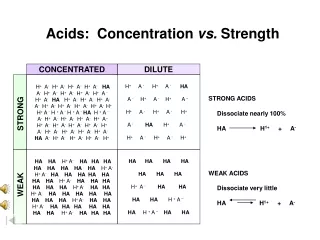
Sources of acid and base • Acids are H+ donors. • Bases are H+ acceptors, or give up OH- in solution. • Acids and bases can be: • Strong – dissociate completely in solution • HCl, NaOH • Weak – dissociate only partially in solution • Lactic acid, carbonic acid
CA CO2 + H2O H2CO3 Kinds of acid and base Volatile: Fixed acid : H2SO4、H2PO4、HCL Acid Base: HCO3- 、Hb-、Na2HPO4、NH3
The body produces more acids than bases • Acids take in with foods • Acids produced by metabolism of lipids and proteins • Cellular metabolism produces CO2. • CO2 + H20 ↔ H2CO3 ↔ H+ + HCO3-
Control of Acids • Buffer systems Take up H+ or release H+ as conditions change Buffer pairs – weak acid and a base Exchange a strong acid or base for a weak one Results in a much smaller pH change
Bicarbonate buffer • Sodium Bicarbonate (NaHCO3) and carbonic acid (H2CO3) • Maintain a 20:1 ratio : HCO3- : H2CO3 HCl + NaHCO3↔ H2CO3 + NaCl NaOH + H2CO3 ↔ NaHCO3 + H2O
Phosphate buffer • Major intracellular buffer • H+ + HPO42-↔ H2PO4- • OH- + H2PO4- ↔ H2O + H2PO42-
Protein Buffers • Includes hemoglobin, work in blood and ISF • Carboxyl group gives up H+ • Amino Group accepts H+ • Side chains that can buffer H+ are present on 27 amino acids.
2. Respiratory mechanisms • Exhalation of carbon dioxide • Powerful, but only works with volatile acids • Doesn’t affect fixed acids like lactic acid • CO2 + H20 ↔ H2CO3 ↔ H+ + HCO3- • Body pH can be adjusted by changing rate and depth of breathing
3. Kidney excretion • Can eliminate large amounts of acid • Can also excrete base • Can conserve and produce bicarb ions • Most effective regulator of pH • If kidneys fail, pH balance fails
Na++ HCO3- H+ H++ HCO3- H+ H2CO3 CA H2O + CO2 H2CO3 HPO42- NH3 CA NH4 + H2PO4- CO2 +H2O
Rates of correction • Buffers function almost instantaneously • Respiratory mechanisms take several minutes to hours • Renal mechanisms may take several hours to days
二、Classification of acid-base disturbances and laboratory tests
pH Review • pH = - log [H+] • H+ is really a proton • Range is from 0 - 14 • If [H+] is high, the solution is acidic; pH < 7 • If [H+] is low, the solution is basic or alkaline ; pH > 7 pH 6.8 7.35 7.45 7.8 death death acidosis alkalosis 【H+】 160 40 16 nmol/L
pH acidosis alkalosis metabolic respiretory metabolic respiretory [HCO3-]↓ PaCO2↑ [HCO3-]↑ PaCO2↓ Classification of acid- base disturbances
Laboratory tests PaCO2 (partial pressure of carbon dioxide) pH SB(standard bicarbonate ) AB(actual bicarbonate ) BB (buffer base) BE( base excess ) -BE(base deficit) AG (anion gap )
pH< 7.35 acidosis • pH > 7.45 alkalosis • The body response to acid-base imbalance is called compensation • May be complete if brought back within normal limits • Partial compensation if range is still outside norms.
Compensation • If underlying problem is metabolic, hyperventilation or hypoventilation can help : respiratory compensation. • If problem is respiratory, renal mechanisms can bring about metabolic compensation.
Acidosis • Principal effect of acidosis is depression of the CNS through ↓ in synaptic transmission. • Generalized weakness • Deranged CNS function the greatest threat • Severe acidosis causes • Disorientation • coma • death
Alkalosis • Alkalosis causes over excitability of the central and peripheral nervous systems. • Numbness • Lightheadedness • It can cause : • Nervousness • muscle spasms or tetany • Convulsions • Loss of consciousness • Death
Metabolic Acidosis • Bicarbonate deficit - blood concentrations of bicarb drop below 22mEq/L • Causes: • Loss of bicarbonate through diarrhea or renal dysfunction • Accumulation of acids (lactic acid or ketones) • Failure of kidneys to excrete H+
Symptoms of Metabolic Acidosis • Headache, lethargy • Nausea, vomiting, diarrhea • Coma • Death
Compensation for Metabolic Acidosis • Increased ventilation • Renal excretion of hydrogen ions if possible • K+ exchanges with excess H+ in ECF • ( H+ into cells, K+ out of cells)
Pathophysiological basis of prevention and treatment treatment of primary disease supplement of base
Respiratory Acidosis • Carbonic acid excess caused by blood levels of CO2 above 45 mm Hg. • Hypercapnia– high levels of CO2 in blood • Chronic conditions: • Depression of respiratory center in brain that controls breathing rate – drugs or head trauma • Paralysis of respiratory or chest muscles • Emphysema
Respiratory Acidosis • Acute conditons: • Adult Respiratory Distress Syndrome • Pulmonary edema • Pneumothorax
Compensation for Respiratory Acidosis • Kidneys eliminate hydrogen ion and retain bicarbonate ion
Signs and Symptoms of Respiratory Acidosis • Breathlessness • Restlessness • Lethargy and disorientation • Tremors, convulsions, coma • Respiratory rate rapid, then gradually depressed • Skin warm and flushed due to vasodilation caused by excess CO2
Pathophysiological basis of prevention and treatment • supplement of base • Increase in alveolar ventilation
Metabolic Alkalosis • Bicarbonate excess - concentration in blood is greater than 26 mEq/L • Causes: • Excess vomiting = loss of stomach acid • Excessive use of alkaline drugs • Certain diuretics • Endocrine disorders • Heavy ingestion of antacids • Severe dehydration
Compensation for Metabolic Alkalosis • Alkalosis most commonly occurs with renal dysfunction, so can’t count on kidneys • Respiratory compensation difficult – hypoventilation limited by hypoxia
Symptoms of Metabolic Alkalosis • Respiration slow and shallow • Hyperactive reflexes ; tetany • Often related to depletion of electrolytes • Atrial tachycardia • Dysrhythmias
Pathophysiological basis of prevention and treatment treatment of primary disease (saline-responsive alkalosis) (saline-resistant alkalosis)
Respiratory Alkalosis • Carbonic acid deficit • pCO2 less than 35 mm Hg (hypocapnea) • Most common acid-base imbalance • Primary cause is hyperventilation
Respiratory Alkalosis • Conditions that stimulate respiratory center: • Oxygen deficiency at high altitudes • Pulmonary disease and Congestive heart failure – caused by hypoxia • Acute anxiety • Fever, anemia • Early salicylate intoxication • Cirrhosis • Gram-negative sepsis
Compensation of Respiratory Alkalosis • Kidneys conserve hydrogen ion • Excrete bicarbonate ion
Pathophysiological basis of prevention and treatment treatment of primary disease
A mixed respiratory acidosis- metabolic acidosis 1.causes 2.characteristics • pH↓↓ • PaCO2 • [HCO3-]↓
A mixed respiratory alkalosis- metabolic alkalosis 1.causes 2.characteristics • pH ↑↑ • PaCO2↓ • [HCO3-]
A mixed respiratory acidosis- metabolic alkalosis 1.causes 2.characteristics • pH (-)、↑、↓ • PaCO2 • [HCO3-]
A mixed respiratory alkalosis-metabolic acidosis 1.causes 2.characteristics • pH (-)、↑、↓ • PaCO2↓ • [HCO3-] ↓
A mixed metabolic acidosis- metabolic alkalosis 1.causes 2.characteristics • pH 、PaCO2 、[HCO3-] uncertain
Diagnosis of Acid-Base Imbalances • Note whether the pH is low (acidosis) or high (alkalosis) • Decide which value, pCO2 or HCO3- , is outside the normal range and could be the cause of the problem. If the cause is a change in pCO2, the problem is respiratory. If the cause is HCO3- the problem is metabolic.