Genetic Disorders
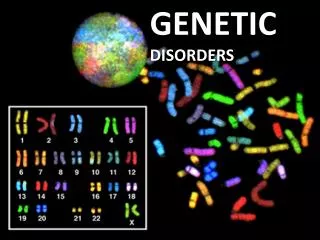
Genetic disorders arise from chromosomal abnormalities, such as trisomy and monosomy. Trisomy occurs when three chromosomes are present instead of two; humans can survive with trisomy on chromosomes 13, 18, and 21, the latter known as Down Syndrome (Trisomy 21). Monosomy involves the absence of one chromosome in a pair. Additional conditions include Klinefelter’s Syndrome (XXY), characterized by male sterility and cognitive challenges, Polydactyly (extra digits), and X-linked traits like color blindness. Understanding these disorders helps in early diagnosis and intervention.

Genetic Disorders
E N D
Presentation Transcript
Genetic Disorders Biology
Trisomy • There are three chromosomes instead of two on an autosome. • Humans can only survive with three chromosomes on numbers 13, 18, and 21.
Monosomy • One member of a chromosomal pair is missing.
Down Syndrome • Trisomy 21 • There are three chromosomes on number 21. • Characteristics • Small Head • Slanted eyes • Infertility in males • Cognitive disabilities
Kleinfelter’s Syndrome • Characteristics • Males are sterile • Some cognitive disabilities • Tall stature • XXY
Polydactyly • People with this disorder have an extra finger or toe. • Small piece of extra tissue; often contains bones with no joints. • 1 in every 500 births
Hairy Ears • X dominant sex linked trait.
Color Blindness • A color vision deficiency • Color blindness can be inherited genetically • It is most common from mutations on the X chromosome.