Maritime Law Enforcement: Jurisdiction, Authority, and Use of Naval Forces
340 likes | 878 Vues
This document explores the critical role of naval forces as effective law enforcement units in maritime contexts. It details the jurisdictional challenges and authorities necessary for lawful enforcement actions, including the importance of comprehensive training, oversight, and adherence to international laws. It also addresses the risk of excessive use of force and the protocols for hot pursuit and consensual boarding of vessels. Additionally, it discusses the coordination between various agencies regarding maritime law enforcement, with a focus on U.S. policies and practices.


Maritime Law Enforcement: Jurisdiction, Authority, and Use of Naval Forces
E N D
Presentation Transcript
INTRODUCTION • Naval Forces as economic & effective law enforcement units • Risk of Excessive Use of Force Avoided by • law enforcement agency control • thorough training • oversight by civil executive, legislative & judicial branches
JURISDICTION & AUTHORITY • Naval Forces Must Have: • international jurisdiction over the vessel or aircraft in question • depends upon nationality, location, status & activity • domestic legal authority to conduct law enforcement operations
ELEMENTS OF JURISDICTION • Location • Nationality of vessel • Nationality of person • Type of offense
BASES FOR JURISDICTION TO PRESCRIBE • Territorial • Objective • Nationality • Passive Personality • Protective • Universal
JURISDICTION AS TO PLACE • Over Own Flagged Vessels Located Anywhere • however, enforcement not undertaken in other state’s national waters w/o consent as a matter of policy • Domestic Law Defines Which Vessels are Considered “Own”
JURISDICTION OVER FOREIGN FLAG VESSELS • Within Own National Waters • if reasonable grounds that vessel is violating own laws • Within Own Contiguous Zone, Exclusive Economic Zone, Over Continental Shelf • only for certain laws • Exception: Sovereign Immune Vessels
HOT PURSUIT OF FOREIGN FLAG VESSELS • Must Begin in National Waters, Contiguous Zone, EEZ, or Over Continental Shelf • for violating own laws applicable to those waters; after order to stop • Must Be Continuous • May Not Extend Into National Waters of Another State
JURISDICTION OVER STATELESS VESSELS • Not Legitimately Registered in Any • Are Subject to Jurisdiction of All • Other Vessels Can Be Regarded As Stateless • certain factors are considered
APPROACH & VISIT • Authorized Vessels & Aircraft May: • Verify Vessel Nationality • Stop, Board Vessel, & Examine Documents • if reasonable suspicion of certain international crimes or stateless • AND if not sovereign immune
CONSENSUAL BOARDING • Authorized Vessels & Aircraft May Request Permission from Master of a Vessel • Examination is Limited By Consent • No Enforcement Authority
CONSENT OF FLAG NATION • Special Arrangement on Case by Case Basis Through Diplomatic Channels • International Agreements on Blanket Basis Authorizing • boarding, or • boarding & enforcement of flag nation’s laws or warship nation’s laws
BOARDING PROCEDURES • Preliminary Questions • basis for decision to visit • Boarding Team • composition • Once Aboard • initial security sweep • review of ship’s papers • inspect or search as appropriate
DOMESTIC LEGAL AUTHORITY • Agency/Courts • Offense • Person
U.S. COUNTER-DRUG LAW • Applies to: • any person aboard a vessel subject to U.S. jurisdiction • US citizens/resident aliens aboard any vessel • Vessel Subject to U.S. Jurisdiction • 6 different categories • Prohibits Manufacture, Distribution or Possession w/ Intent
U.S. COAST GUARD MARITIME LAW ENFORCEMENT AUTHORITY • Primary Maritime Law Enforcement Agency • Lead Agency for Maritime Drug Interdiction • Authority to Inquire, Inspect, Search, Seize, Arrest for Violations of U.S. Law • E-4 and Above Have Arrest Authority & Are Designated Customs Agents
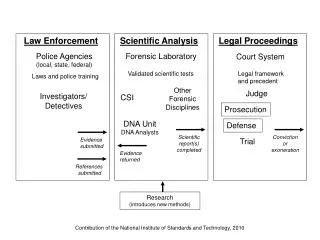
INTERAGENCY COORDINATION • Standing U.S. Procedure for Interagency Coordination • concerning non-military incidents which could adversely impact foreign relations • State Dept & Other Concerned Agencies Notified
U.S. DOD MARITIME LAW ENFORCEMENT MISSION • U.S. Law & Policy Prohibits DoD From Enforcing U.S. Law • potential exception for outside U.S. • exception for indirect Involvement or assistance if furthering military function • certain U.S. laws provide other exceptions
U.S. DOD MARITIME LAW ENFORCEMENT MISSION • U.S. Laws Authorizing DoD Limited Counterdrug Missions • lead agency for detecting & monitoring air and maritime transit of drugs into U.S. • train & advise law enforcement officers in the operation of loaned equipment • maintain and operate DoD equipment to intercept & communicate w/ vessels and aircraft outside U.S.
U.S. DOD MARITIME LAW ENFORCEMENT MISSION • U.S. Laws Authorizing DoD Limited Counterdrug Missions • Operate communications equipment being used for law enforcement operations • Transport law enforcement personnel • operate base of operations A narco-submarine seized in Ecuador in July 2010
U.S. DOD MARITIME LAW ENFORCEMENT MISSION • U.S. Laws Authorizing DoD Limited Counterdrug Missions • provide information acquired during military training and operations • make equipment & facilities available to law enforcement authorities • embark USCG Law Enforcement Detachments
USE OF FORCE POLICY • Resort to Using Force May Be Necessary to Enforce the Law • regulations should state authority • personnel should be trained • law enforcement Use of Force Policy different from Military ROE
USE OF FORCE POLICY • Force Generally Authorized: • for self-defense & defense of others • to prevent a crime • to effect a lawful arrest • to protect property • to compel compliance with lawful order • Use Only Minimum Force Necessary
USE OF FORCE POLICY • Deadly Force Generally Authorized When Other Person: • has means to inflict death or serious bodily injury, • has opportunity to do so; and • has the immediate, present intention to do so. • No Duty to Retreat
USE OF FORCE POLICY • Warning Shots and Disabling Fire • policy should be specific & standard • decision reserved to senior officers • jurisdiction over suspect vessel must be confirmed • alternative means of stopping vessel should normally be attempted first • force limited to stopping vessel