More on Maize and Its Growth
290 likes | 496 Vues
More on Maize and Its Growth. Corn or Maize – Zea mays. Zea mays subsp. mexicana. Zea mays subsp. mays. Variation in ear size and kernel color from Mexican landraces of corn. Steps from Teosinte to Maize.


More on Maize and Its Growth
E N D
Presentation Transcript
Corn or Maize – Zea mays
Zea mays subsp. mexicana Zea mays subsp. mays
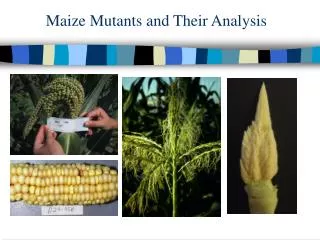
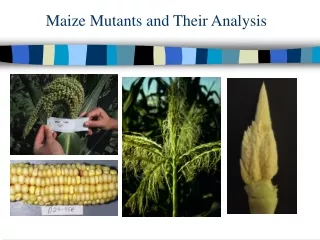
Variation in ear size and kernel color fromMexican landraces of corn
Steps from Teosinte to Maize • Maize cobs do not shatter (fall apart) whereas teosinte ears shatter when mature • Each teosinte grain is netled in a hard, deep floral structure the cupule and covered by a hard sheath (the glume). The grains of corn are naked and held outside a collapsed cupule • Each teosintecupule contains a single fertile spikelet; maize cupules have two fertile spikelets • Teosinte cupules are arranged in 2 ranks (rows) but maize are in 4 to 10 rows • Teosinte has long primary branches that each ends in a male tassel and there are numerous tiny ears along each branch. Maize has short primary branches that end in a single ear – only a few ears per plant; male tassel at apex of plant
Benefits of Three Sisters Mounds • In the Northeast where ground was frequently cold and damp in early spring, mounds allowed the soil to warm up and drain more quickly • Mounds allowed an increase in soil organic matter by repeatedly incorporating dead plant material with soil in mounds • Decomposition of dead plant material increased soil nutrients; also growing beans which are N-fixers increased soil N for all plants in the mound • Mounds minimized soil compaction (people did not walk on mounds, but around them) and reduced soil erosion as fields were not constantly plowed or dug up • Mound system allowed easy regulation of plant spacing and plant populations