Spring Indices
This research examines the phenological observations of lilac first leaf and bloom dates from sites in Vermont over the period 1956 to 2003. Utilizing cloned lilac data, the study focuses on estimating chilling requirements and the construction of spring indices models. This includes analysis of chilling unit determination, freeze dates, and damage index values. The results highlight trends in phenological changes and their correlation with climatic variables, providing insights into the impacts of climate change on plant phenology.

Spring Indices
E N D
Presentation Transcript
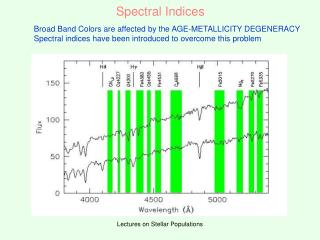
Spring Indices Continental-scale phenological models
Lilac Phenological Observation SitesYears of Observation, 1956-2003
Cloned lilac first leaf and first bloom datesat a single station in Vermont
Model ConstructionDSH = days since start of heat unit accumulation • (1000/DSH) = Regression Constant + (A1*X1/DSH) + (A2*X2/DSH) + . . . (An*Xn/DSH) • Multiply through by DSH to transform into 1000 = (Regression Constant*DSH) + (A1*X1) + (A2*X2) + . . . (An*Xn)
Spring Indices Suite of Measures • First -2.2oC freeze date in Autumn • Composite chill date (SI models) • First leaf date (SI models) • First bloom date (SI models) • Last -2.2oC freeze date in Spring • -2.2oC Freeze period • Damage index value (first leaf – last frost) • Average annual, average seasonal, and twelve average monthly temperatures
SI First Leaf Date 1961-2000 Slope Source: Schwartz et al. 2006, Global Change Biology, Figure 1
North America SI First Leaf Date Departures Source: Schwartz and Reiter 2000, Int. J. Climatology, Plate 4 (updated)
North Amer. Last –2.2oC Freeze Date Departures Source: Schwartz (unpublished)
SI Damage Index Value 1961-2000 Slope(SI First Leaf Date – Last Freeze Date) Source: Schwartz et al. 2006, Global Change Biology, Figure 5
SI First Bloom – First Leaf Difference Source: Hanes and Schwartz (unpublished)
Integrated ApproachExample: WisconsinZhao and Schwartz (2003) • Satellite phenology (DMA SOS) • Simulated phenology (SI first bloom dates) • “Native” species phenology (WPS records of first bloom date for 21 introduced and 32 native species)
Integrated Species Indices (ISI)southwestern Wisconsin Source: Zhao & Schwartz 2003, Climate Research, Figure 4a (in color)