Identifying Insects: Key Characteristics & Life Cycles for 5th Graders
Discover how to identify insects from other arthropods with this engaging guide for 5th graders. Learn the defining features of insects, including their three body sections: head, thorax, and abdomen. Understand the importance of legs, antennae, and wings, and explore the fascinating life cycles of insects through complete and gradual metamorphosis. This resource highlights common insects like grasshoppers, beetles, and butterflies, while providing insight into their unique feeding habits and ecological roles. A great way to enhance your understanding of these diverse creatures!

Identifying Insects: Key Characteristics & Life Cycles for 5th Graders
E N D
Presentation Transcript
Insects 5th Grade
How can you identify insects from other Arthropods? • number of body sections (3) • number of legs (6) • pair of antennae (1) *usually have one or 2 pairs of wings
Body Sections (3) • Head –sense organs, eyes, antennae • Thorax– midsection where legs and wings are attached • Abdomen –inside are internal organs, small holes outside abdomen contain tubes that allow air (oxygen) to enter the body
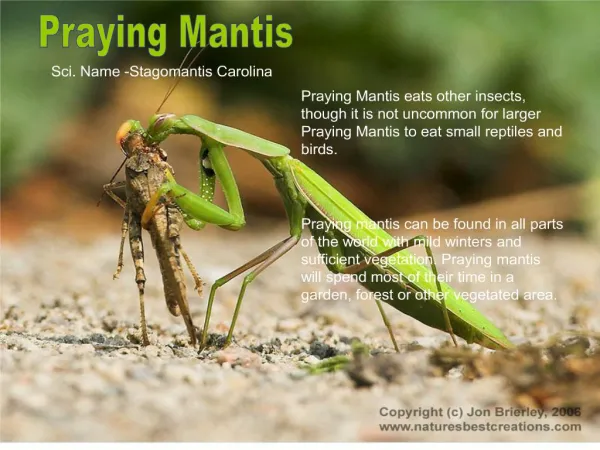
Rule: “If it is living or if it once was living, some kind of insect will eat it.” • Leaves or nectar • Wood lice eat PAPER! • Fleas and mosquitos feed on the blood of living animals • Dung beetles feed on animal droppings • Burying beetles feed on the decaying bodies of dead animals
Life Cycle: Insects go through a Complete Metamorphosis or a Gradual Metamorphosis • Gradual Metamorphosis: • No distinct larval stage • Egg hatches into a nymph (looks like an adult without wings) • Complete Metamorphosis: • 4 different stages • Egg, larva, pupa, adult
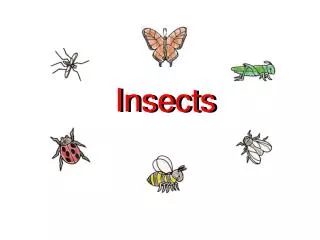
Gradual Metamorphosis: (Dragonfly) Examples of Insects: • Grasshoppers • Termites • Cockroaches • Dragonflies
Complete Metamorphosis: *Examples of Insects: Beetles Butterflies Ants Flies
During the “pupa” phase, insects are inside a protective pupal case called a “Chrysalis”
Complete Metamorphosis: • Eggs • Larvae –usually look like worms • Pupa –insect is enclosed in a protective covering called a chrysalis (wings, legs, antennae form) • Adult
Ants • http://www.brainpop.com/science/diversityoflife/ants/