SlideServe
Menu
Préférences
© SlideServe · v2026

Understanding the British Empire and the Suez Canal's Role in 20th Century Politics

judah-mclaughlin avatar
12 diapositives · 258 Views · Oct 31, 2014

Discover the historical significance of the British Empire at its zenith in the early 1900s and the crucial role of the Suez Canal. This activity encourages students to reflect on their feelings about historical maps and analyze the geopolitical dynamics during the Suez Crisis. Explore the canal's construction, its immense economic importance, and the shifting power landscape following World War II. By examining events, such as Anthony Eden's leadership and Nasser's rise, students will understand the intricate connections between imperialism, nationalism, and global trade.
Understanding the British Empire and the Suez Canal's Role in 20th Century Politics - slide 1
01 / 12Understanding the British Empire and the Suez Canal's Role in 20th Century Politics
1 / 17

Télécharger la présentation

Understanding the British Empire and the Suez Canal's Role in 20th Century Politics
Une image / un lien ci-dessous est fourni (tel quel) pour télécharger la présentation

Politique de téléchargement : le contenu du site vous est fourni TEL QUEL pour votre information et votre usage personnel ; il ne peut être vendu, concédé sous licence ni partagé sur d’autres sites sans l’accord de son auteur.Le contenu vous est fourni TEL QUEL, pour votre information et votre usage personnel uniquement. Téléchargez la présentation en cliquant sur ce lien. Lors du téléchargement, si vous ne parvenez pas à télécharger une présentation, l’éditeur a peut-être supprimé le fichier de son serveur.Pendant le téléchargement, si vous ne parvenez pas à obtenir une présentation, le fichier a peut-être été supprimé par l’éditeur.

F I N

Plus de contenu associé

Transcription de la présentation
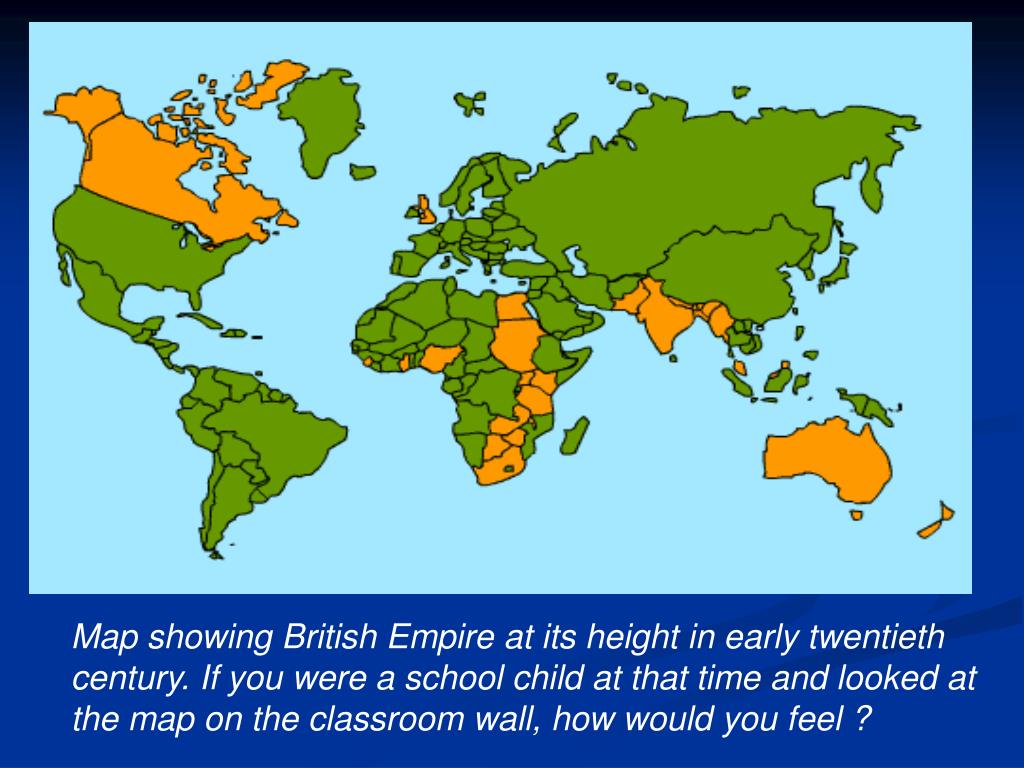
  1. starter activity Map showing British Empire at its height in early twentieth century. If you were a school child at that time and looked at the map on the classroom wall, how would you feel ?

  2. British overseas territories today. How would the same school child in the early 1900s feel about this map if they could have seen it?

  3.  Your task. Pin the tail on Suez! Where do you think the Suez Canal was on this map?

  4. The Suez Crisis From: http://www.igshistoryonline.co.uk/Resources/GCSE%20Resources.htm adapted by Mr. C Wright

  5. What was the Suez Canal ? • The Suez Canal opened to traffic in November 1869 • It was built by Frenchman Ferdinand de Lesseps using Egyptian forced labour; an estimated 120,000 workers died during construction • It stretches 192km (120 miles) between the Mediterranean and the Red Sea • It is 300m (984ft) wide at its narrowest point

  6. The Suez Canal reduced the sea route to Asia by 6,000 km

  7. Both the Panama and Suez Canals greatly improved world trade.

  8. Why is the canal so important? • By 1955 approximately two-thirds of Europe's oil passed through the canal • The waterway closed 1967 due to the Six Day War, reopened 1975 • About 7.5% of world sea trade is carried via the canal today • Receipts from the canal July 2005 to May 2006 totalled $3,246m • In 2005, 18,193 vessels passed through the canal

  9. Section one • Great Britain was in Eden’s (the Prime Minister) view still a great imperial nation, an influential figure in world politics • Empire under threat, e.g. Ghana, Nigeria; India already given independence Anthony Eden

  10. Section two Mussolini, Italian dictator in early twentieth century • Eden suspected that the Egyptian President Nasser would be the Mussolini of the Middle East • Nasser was a nationalist – implications for imperialists like GB • Canal was of limited strategic importance but of growing economic significance President Nasser

  11. Section three • France- had built Suez, but also Egypt had sponsored Algerian rebels • Israel – wanted to retaliate for attacks by Palestinians supported by Egypt • US not informed of plan, refused its support The military plan

  12. Impact • GB lost sight of Cold War tensions in Europe – Hungarian Uprising • Confirmed GB had lost its global prominence • GB moved closer to US, France to Europe in foreign policy planning Eden resigned Macmillan new PM