
Animal Classification: Exploring the Diversity of Mammals, Fish, Birds, Reptiles, and Amphibians
E N D
Presentation Transcript
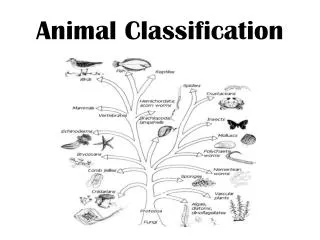
Animal Classification • Animals are separated into groups or categories so that they are more easily studied and discussed by scientists and others. www.assignmentpoint.com
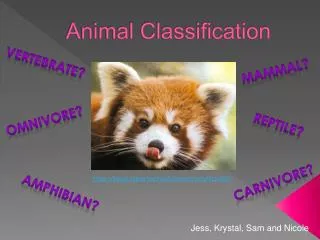
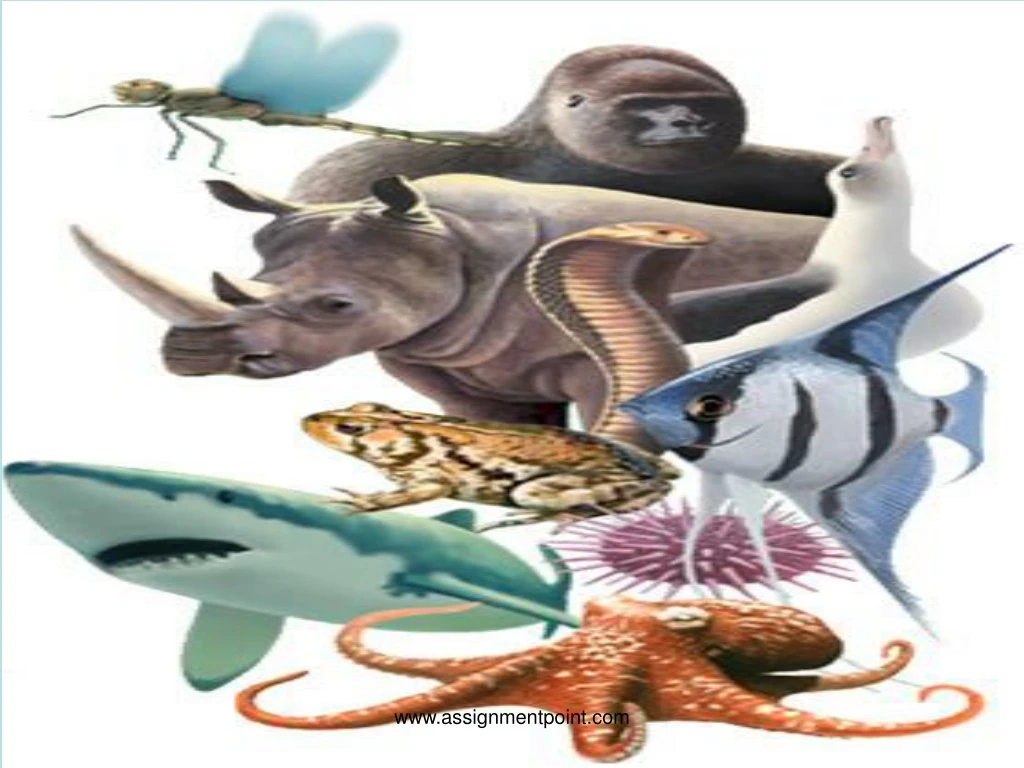
Animal Classification • Mammals • Fish • Birds • Reptiles • Amphibians www.assignmentpoint.com
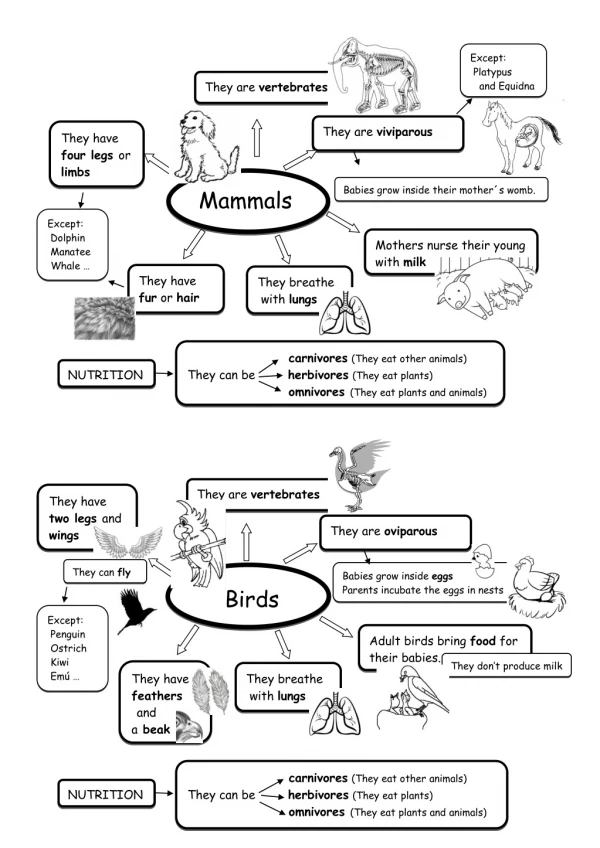
Mammals Characteristics: • Have teeth • Have hair • Are warm blooded • Have a single jaw bone • Have inner ear bones • Produce milk for their young www.assignmentpoint.com
Mammals • Mammals have larger brains and seem to be the most capable learners. • All mammalian mothers nourish their babies with milk. www.assignmentpoint.com
Fish Characteristics: • Are cold-blooded vertebrate (backbone) • Live in water • Usually have paired fins, gills, and scales www.assignmentpoint.com
Fish • Most fish lay large numbers of eggs, but some have live birth. • Most fish breathe by drawing water over four or five pairs of gills. www.assignmentpoint.com
Amphibians Characteristics: • Are cold-blooded vertebrate (backbone) • Lay their eggs in water • Lack any skin coverings such as fur, scales or feathers www.assignmentpoint.com
Amphibians • Young amphibians tend to resemble small fish. • Amphibian means "two lives," a reference to the change that frogs go through as they move from egg to tadpole to frog. • Even as adults, most frogs and other amphibians must stay close to water. www.assignmentpoint.com
Birds Characteristics: • Have feathers • Lay eggs • Have bodies specially adapted for flight • Have a beak rather than teeth www.assignmentpoint.com
Birds • Their nearly hollow bones provide lightweight strength. • Birds now live almost everywhere on Earth. www.assignmentpoint.com
Reptiles Characteristics: • Have scales • Lay leathery eggs on land • Are often called cold-blooded because they can't regulate their own body temperature www.assignmentpoint.com
Reptiles • Reptiles do not use energy to fuel internal "furnaces" • Although reptiles breathe through lungs, some reptiles can also absorb oxygen in water through their mouth. www.assignmentpoint.com
Resources • Quia Classification Quiz • Charts: Animal classification, Fish, Bird, Amphibian, Animals, • The Animal Kingdom www.assignmentpoint.com
Resources http://www.nmnh.si.edu/BIRDNET/ http://falcon.jmu.edu/~ramseyil/vertebrates.htm http://www.edhelper.com/AnimalReadingComprehension_1_1.html http://www.edhelper.com/animals.htm http://animaldiversity.ummz.umich.edu/site/index.html http://anthro.palomar.edu/animal/links.htm http://www.dowslane.org/reptile.html http://www.seaworld.org/animal-info/animal-bytes/index.htm http://www.hhmi.org/coolscience/critters/critters.html http://www.quia.com/servlets/quia.activities.common.ActivityPlayer?AP_rand=785616651&AP_activityType=14&AP_urlId=1130&AP_continuePlay=true&id=1130 www.assignmentpoint.com