Download
1 / 10
100 likes | 235 Vues
This presentation by Dr. Eugen Kvasnak discusses the principles and applications of infrared imaging in medicine. It explores thermal radiation from the sun, the long-wavelength IR spectrum, and the significance of non-ionizing near-IR technology. Key topics include the emission and transmission principles in IR photography, thermography, and technical thermography applications in various fields such as meteorology and medicine. The talk emphasizes the non-invasive detection of human body energy and the clinical implications in vascular health, inflammatory processes, and thermoregulation.

E N D
Infrared imaging Eugen Kvasnak, PhD. Department of Medical Biophysics and Informatics 3rd Medical Faculty of Charles University
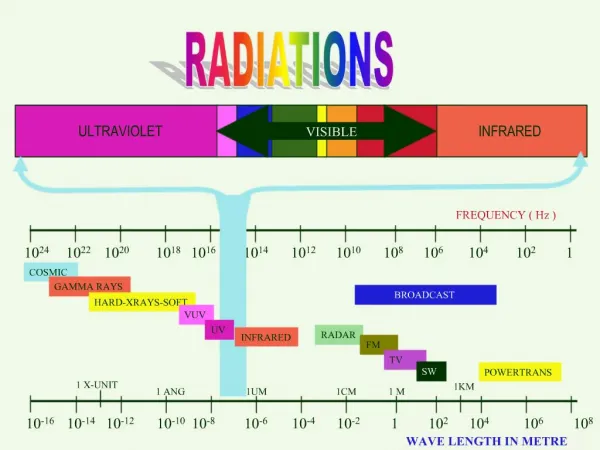
Herschel 1800 - thermal radiation of the sun IRradiation - longer wavelength than light -mostly heat effects - invisible, not ionizing nearIR 0,8 – 25 μm - medical applications far IR 25 μm – 1 mm – meteorology, astronomy
IR imaging technique Emission principle IR photography thermography liquid crystals thermovision- b&w - colourthermovision camera - digital • Transmission principle • IR laser tomography
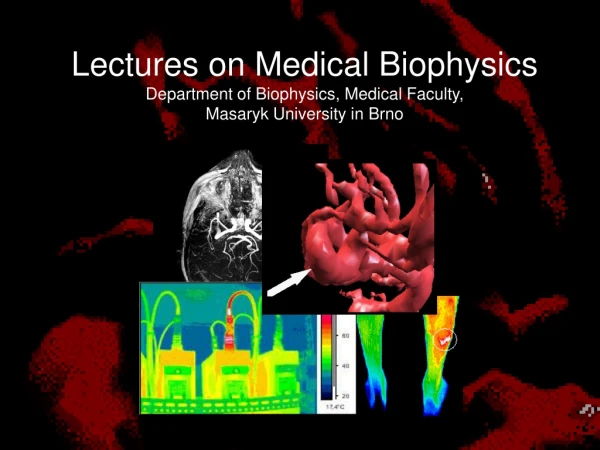
Technical thermography : • noktovision, meteorology • Medicalthermography – thermovision: • Noninvasive detection of human body energy • Recording of body surface distribution of temperatures • no radiation X thermometry – point temperature recording
Physical principles of thermovision E = k.T4 Planck’s law Wien law
Technical scheme of thermovision IR detector – semiconductor InSb - cooling by liquid N2(-196o C)
Clinical aplication Inflamatory proceses – joints, soft tissues Phlebology – vein trombosis Vascular cancer Ischemyof the limbs … Sudeck syndrom Head zones
Thermoregulation isothermalareas 37o 40o C