Tips for Effective Review of Others' Writing in ITS 1410
40 likes | 154 Vues
This guide provides essential strategies for reviewing someone else's materials, focusing on common issues such as singular subjects with plural verbs, irrelevant examples, and lack of clarity. Learn how to avoid negative thinking that permeates writing, recognize noun clumps and the passive voice, and identify unclear references and unexplained terms. By addressing sequential goofs, sexism in language, and verbosity, you can enhance the quality of the review and provide valuable feedback. Elevate your writing and critical analysis skills in ITS 1410.


Tips for Effective Review of Others' Writing in ITS 1410
E N D
Presentation Transcript
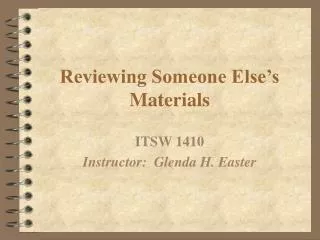
Reviewing Someone Else’s Materials ITSW 1410 Instructor: Glenda H. Easter
DisagreementSingular subject followed by many prepositional phrases containing plural objects, then a plural verb. IrrelevanciesExamples that don’t match. Lack of EnergySentences that trail off. Negative ThinkingParagraphs that start with a caution or restriction, double negatives, statements that could be phrased in positive terms. Untangle the Prose Reviewing Someone Else's Materials
Noun ClumpsThree or four nouns in a row. Passive Voice The verb “to be” should signal trouble and avoided, if possible. Sequential GoofsParagraphs that don’t follow chronological sequence. SexismAny use of he or she should trip the alarm. Unclear References a ”that” clause that appears long after the object it refers. Unexplained Terms, abbreviations, and acronyms Untangle the Prose(Continued) Reviewing Someone Else's Materials
Untangle the Prose(Continued) • Future Tense • Avoid Verbosity or wordiness • Avoid Pomposity or pride Reviewing Someone Else's Materials







![2008 ITRS Emerging Research Materials [ERM] December 6, 2008](https://cdn2.slideserve.com/4220113/2008-itrs-emerging-research-materials-erm-december-6-2008-dt.jpg)