Download
1 / 9
100 likes | 225 Vues
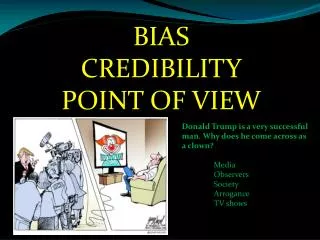
This text explores the concepts of bias, credibility, and media literacy. It defines key terms, including bias as personal opinions about topics, credibility as the reliability and trustworthiness of information, and influence as the power to affect others' thinking. It also discusses media literacy as the ability to evaluate and communicate messages effectively. Furthermore, it addresses the importance of understanding prejudice and differing vantage points in assessing information critically. This foundational knowledge is essential for navigating today's complex media landscape.

E N D
Bias • personal opinions or beliefs regarding a topic, issue or situation
Compare • to consider or describe as similar or equal
Contrast • the act of distinguishing differences
Credibility • the reliability of information as well as the integrity and trustworthiness of the author, his message and his method of conveying his message
Influence • the power that someone has to affect other people’s thinking or actions by means of argument, example or force of personality
Media Literacy • the ability to access, analyze, interpret, evaluate and communicate messages in a variety of forms
Prejudice • an adverse judgment or opinion formed beforehand or without knowledge or examination of the facts
Vantage Point • a position that affords a broad overall view or perspective of a place or situation