ADDITIVES
Dive into the world of food additives and discover the reasons for their inclusion in food, various types like colours, preservatives, and emulsifiers, and potential health implications. Learn about E-numbers and their significance.

ADDITIVES
E N D
Presentation Transcript
ADDITIVES Valentina Pajk & Ksenija Zupanc Slovenia
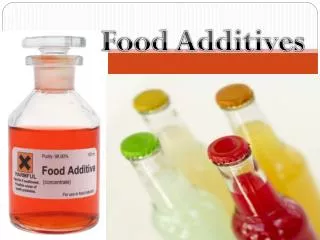
What are additives? • Food additives are substances added to food to preserve flavour or improve its taste and appearance.
Why use additives? • …to keep high quality of food • …to make the food look appealing • …to give shape and structure • …to prevent the growth of fungi, moulds and yeasts • …to prevent the oxidation of food • …to give a sharp taste to foods
Tyes of additives • Colours • Emulsifiers • Flavourings • Gelling Agents, Thickeners and Stabilisers • Preservatives • Sweeteners • Anti-Caking Agents • Antioxidants
Colours • Food look more appealing • Food cooked or processed for sale, they lose their natural colour • They cause hyperactivity
Tyes of additives • Colours • Emulsifiers • Flavourings • Gelling Agents, Thickeners and Stabilisers • Preservatives • Sweeteners • Anti-Caking Agents • Antioxidants
Emulsifiers • Keeps the mixture of oil and water stable and prevents from separating into two layers • Bread, Chewing gum, Breakfast cereals, Ice-cream, … • Propane-1,2-diol is used in cake dressings its consequences are still not known
Tyes of additives • Colours • Emulsifiers • Flavourings • Gelling Agents, Thickeners and Stabilisers • Preservatives • Sweeteners • Anti-Caking Agents • Antioxidants
Flavourings • An imitation of the flavour of a known food • Creative Flavourist • Possibility of alergies • Citric acid
Tyes of additives • Colours • Emulsifiers • Flavourings • Gelling Agents, Thickeners and Stabilisers • Preservatives • Sweeteners • Anti-Caking Agents • Antioxidants
Gelling Agents, Thickeners and Stabilisers • To give shape and structurtoe • To make food thicker • To maintain the physical and textural properties of foodstuffs
Tyes of additives • Colours • Emulsifiers • Flavourings • Gelling Agents, Thickeners and Stabilisers • Preservatives • Sweeteners • Anti-Caking Agents • Antioxidants
Preservatives • Fungistatic in action • Prevent the growth of fungi, moulds and yeasts • Control the spread of bacteria • Alfatoxins are toxic and the most carcinogenic substances known
Tyes of additives • Colours • Emulsifiers • Flavourings • Gelling Agents, Thickeners and Stabilisers • Preservatives • Sweeteners • Anti-Caking Agents • Antioxidants
Sweeteners • Most important flavouring substance • Source of energy • Possibilty health problems • Sugar free sweets and drinks all contain sweeteners • Saccharin and aspartam are carcinogenic
Tyes of additives • Colours • Emulsifiers • Flavourings • Gelling Agents, Thickeners and Stabilisers • Preservatives • Sweeteners • Anti-Caking Agents • Antioxidants
Anti-Caking Agents • added to allow them to flow • vending machine powders, milk and cream powders, grated cheese, baking powder, instant soup powders, table salt,…
Tyes of additives • Colours • Emulsifiers • Flavourings • Gelling Agents, Thickeners and Stabilisers • Preservatives • Sweeteners • Anti-Caking Agents • Antioxidants
Antioxidants • Chemicals in the food expose to oxygen in the air • Use to slow the rate of oxidation • Phosphoric acid is used in beers and vegetable oils, it causes diarrhea.
What are E-numbers? • A systematic way of identifying food additives • European Food Safety Authority (EFSA)