Download
1 / 13
130 likes | 256 Vues
REDD+ (Reducing Emissions from Deforestation and Forest Degradation) is essential for addressing greenhouse gas emissions from deforestation, with over $7.2 billion in public financing committed for capacity building. It aligns with national priorities for climate change mitigation and adaptation, particularly in developing countries. The Mai Ndombe REDD+ Project in the DRC showcases the benefits of sustainable development through job creation, habitat conservation, and community engagement, while also avoiding over 54 million tons of CO2 emissions and ensuring biodiversity protection.

E N D
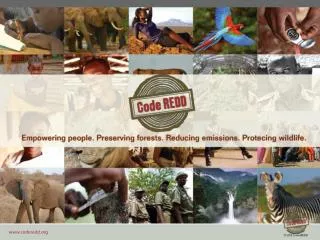
Understanding REDD+ Actions • United Nations Framework Convention on Climate Change to address greenhouse gas emissions from deforestation and degradation • $7.2billion in public financing commitments to fund REDD+ capacity building • Global warming mitigation and adaptation is a national priority in developing countries • Private sector pioneering REDD+ projects
REDD+ Globally Countries that are actively supporting REDD+
NETWORKOF STAKEHOLDERS WHO SUPPORTS CODE REDD
MINING INDUSTRY REASONS TO SUPPORT REDD+ • Reduce risk • Create shareholder value • Secure and maintain social and environmental licenses to operate
CORE BUSINESS STRATEGY Considerations for Implementation • Regional scale to community benefit programs • Biodiversity compensation/offsets that meet lending requirements • Improved local governance, development, risk mgmt. • Global warming mitigation & adaptation support
Project Impacts: • Created new migratory corridor between Tsavo East and Tsavo West National Parks • Protects over 200,000 hectares • Benefits 150,000 rural Kenyans through regional sustainable development programs • Avoids emissions of over 54 million tons of CO2 over 30 year life • Corporate Partnerships: • Puma – sourcing new products • Allianz – building new business units • Nedbank – engaging stakeholders
Code REDD Project Showcase: Mai Ndombe REDD+ Project, DRC • Goals: Sustainable development through job creation, habitat conservation, biodiversity protection, and reductions in greenhouse gas emissions • Revenue Contract:DRC receives higher revenues compared to logging. German energy company committed to a portion of VERs for conservation and development results • Location: Banundu Province, Central Congo Basin • Population: 32,000 over 23 villages • Area: 300,000 hectares • Time Horizon: 30 years • Project Partners: Ecosystem Restoration Associates(ERA), Wildlife Works
Mai Ndombeparticipatory community Development • Documented land rights and boundaries • Established democratic committees for inclusive decision-making • Organized rural co-operatives to facilitate trade • Improve river and lake transportation system • Build at least 19 schools in 19 villages • Build 5 healthcare centers, a mobile clinic, and improve 2 regional hospitals • Improve nutrition through workshops • Agricultural training program • Improve clean water access • Improve fishery management
Mai NdombeREDD+ Project ensures the continuation of criticalforest and wetland habitat and endangered biodiversity • Endangered fauna: Bonobos, Forest elephants, Giant anteaters, Dwarf crocodiles • Endangered flora: 7 identified species on IUCN Red List (Wenge) • Part of the Ngiri-Tumba-Mai Ndombe Wetland system • Protein substitution programs • Community trust funds • Environmental education program • Biodiversity & forest monitoring and reporting setup by Missouri Botanical, ERA, and Wildlife Works
GLOBAL WARMING Mitigation & Adaptation • Prevents175M tCO2eover 30 year period (5.8M tCO2e per annum) • Convertedland-use concession from logging to conservation • Haltsthe expansion of charcoal production and slash/burn agriculture • Improves yields of timber and forest products around settlements through investments in land management and reforestation • Developing MFI, eco-charcoal and renewable energy micro-grid programs
Understanding REDD+ Actions • United Nations Framework Convention on Climate Change to address greenhouse gas emissions from deforestation and degradation • $4.5 billion in public financing commitments to fund REDD+ capacity building • Global warming mitigation and adaptation is a national priority in developing countries • Private sector pioneering REDD+ projects