NERVOUS SYSTEM NOTES
The nervous system comprises the brain, spinal cord, and nerves, playing a crucial role in receiving information, directing responses, and maintaining internal stability. The brain controls most bodily functions, while the spinal cord connects the brain to peripheral nerves, enabling movement, thoughts, and sensations. To maintain a healthy nervous system, avoid drugs, maintain a balanced diet, stay hydrated, and exercise regularly. Conditions like stroke and Alzheimer's disease can severely affect nerve functions. Fun facts highlight the complexities of senses like smell and balance.

NERVOUS SYSTEM NOTES
E N D
Presentation Transcript
NERVOUS SYSTEM NOTES Page 486 in the Blue Books
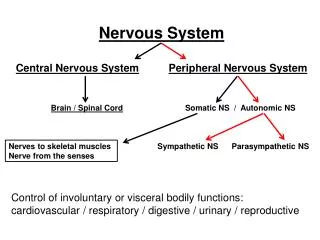
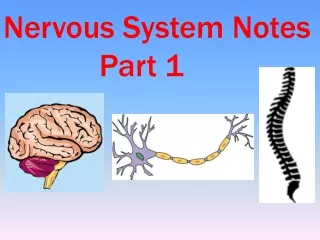
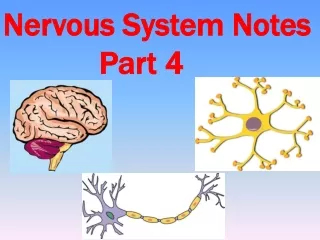
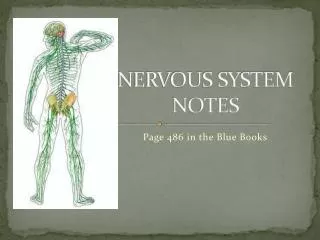
The Nervous System Includes… • Brain • Spinal cord • Nerves
Its function is to… • Receive information about what is happening inside and outside the body • Directs the way the body responds • Maintains stable internal conditions.
Structure info: • Brain • ● controls most functions in the body • Spinal cord • ● thick column of nerve tissue that links the brain to the peripheral nerves. • Nerves • ● bundles of nerve fibers – carries messages from the brain
How is structure and function related? • Enables nerve impulses to be carried to allow movement, thought, sensations/senses.
Taking care… • Don’t Do Drugs! • Eat balanced diet and drink plenty of water • exerciseregularly
Diseases/Conditions of the Nervous system: • Stroke– blockage of artery to brain causing damage to nerves/brain. • Alzheimer’s – degeneration of nerve connections that cause memory loss.
Fun Facts: • The nose can distinguish at least 50basic odors. The sense of smell and taste determine the flavor of food. • When your head moves, the fluid in the inner ear moves bending hair-like structures in the ear. This lets the brain know the position of your body. If the brain senses that you are losing your balance, it sends impulses to muscles that help you restore your balance.