Meeting Minutes
60 likes | 205 Vues
This document provides a structured approach to recording meeting minutes, highlighting the essential elements required for effective documentation. It details the format, including identification numbers for entries, the necessity of including the date, location, and attendees, and the breakdown of discussion points into old and new business. It outlines how to accurately record motions and their outcomes to ensure clarity and legal validity. Additionally, it offers an evaluation exercise to assess understanding of meeting minute requirements.


Meeting Minutes
E N D
Presentation Transcript
Purpose • A general summary of the topics discussed and decided during each meeting • Serves as legal documentation
Format • Each entry is identified by a two-part number • First number: year • Second number: entry number • Example: 95.113: an entry done in 1995. The 113th entry in the organizations minutes that year. • Purpose: easy reference in future minutes
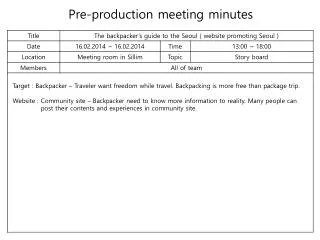
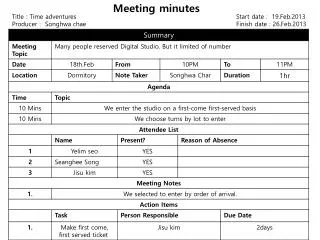
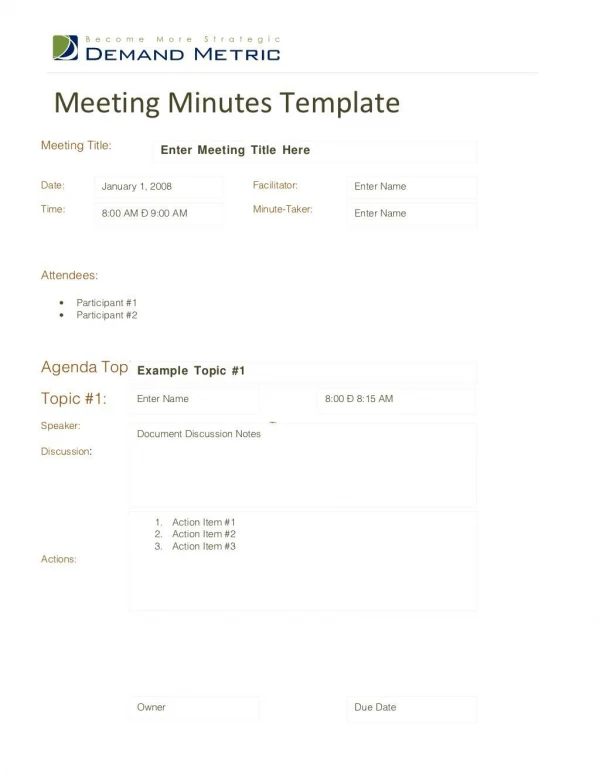
Format • Heading • Location, date, and time of meeting • Role Call: list people present in meeting • First article: who calls meeting to order? • Old Business: summarize who said what
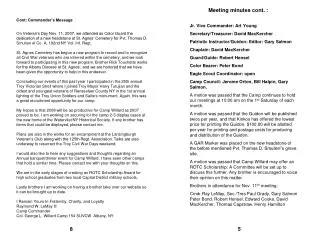
Format Con’t • New Business: summarize who said what • Record all motions made: who made them; who seconded • Record general summary of discussion • Record outcome of motion (amended, tabled, or vote) • Future Business • Record next meeting dates, if announce • “Submitted by” and your name at end
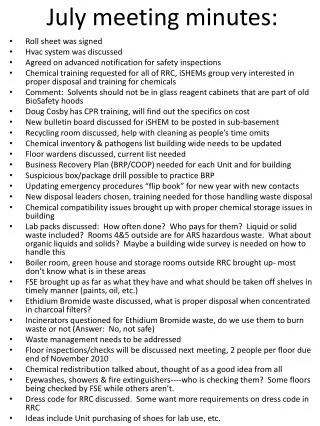
Sample Evaluation • Read through the sample meeting minutes • With a partner, see if you can figure out: • Who attended the meeting? • How did each person contribute to the meeting? • When and where did the meeting take place? • What was planned, and when will it take place?