Exploring the Temperate Rainforest Biome: Geography, Climate, and Biodiversity
The temperate rainforest biome, found in regions like Alaska, Canada, and California, is characterized by a three-layer structure: the canopy, understory, and forest floor. It boasts nutrient-rich soils and receives 7-12 inches of rain annually, maintaining a mild climate with warm summers and cool, wet conditions. Species adaptations include low-growing lichens in the understory and diverse animal life relying on the forest layers for protection. This ecosystem supports a rich biodiversity, crucial for sustainability by providing resources and contributing to the economy.

Exploring the Temperate Rainforest Biome: Geography, Climate, and Biodiversity
E N D
Presentation Transcript
Temperate Rainforest Biome Research By Chris colbert
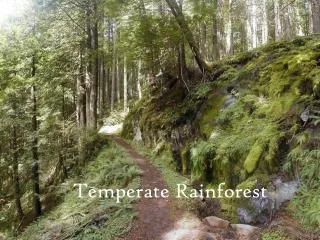
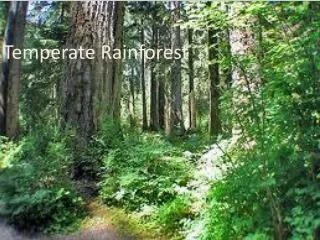
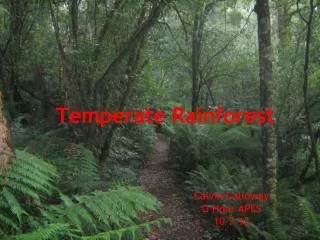
Temperate RainforestGeography & Climate Location: Alaska, Canada, and California Description: The topmost layer is the Canopy, the middle layer is Understory and the lowest is the Forest floor. Soil type: Very rich in nutrients. Precipitation: 7in-12in of rain per year. Temp. range: Warm in summer but mostly cool and wet. Climate: Mild
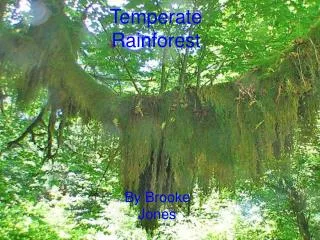
Temperate RainforestAdaptations Needed for Survival Plant: On the lowest layer there is a thick covering of low-growing lichens. Animal: Most animals live on or near the forest floor, understory, and the canopy, which provides protection for animals.
Temperate RainforestInteractions of Biotic and Abiotic Biotic: Large food web with lots of animals. Abiotic: A fire will destroy the environment but support new growth.
What is Biodiversity? The number of different species of plants and animals in a area.
How does biodiversity contribute to the sustainability of an ecosystem? It provides us with an array of foods and materials and it contributes to the economy.