Exploring the Temperate Rainforest Climate: A Unique Biome
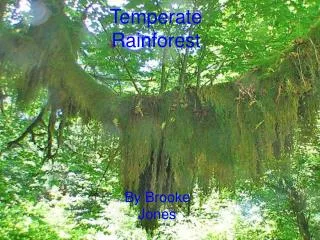
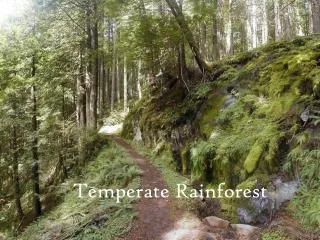
The temperate rainforest climate is characterized by average rainfall ranging from 200 to 340 cm and temperatures around 20°C, encompassing all four seasons. This smallest biome by coverage area thrives mainly near oceans, featuring foggy, moist conditions. Rich in biodiversity, it is home to conifers, mosses, lichens, and unique animals like the internally fertilizing frog. Adaptations such as thicker bark on trees and hibernation in animals underscore the resilience of this ecosystem, which faces increasing threats from human activities like clear-cutting and development.

Exploring the Temperate Rainforest Climate: A Unique Biome
E N D
Presentation Transcript
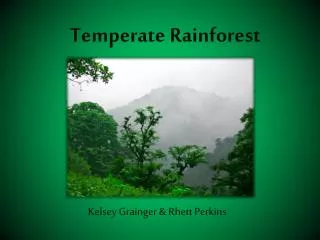
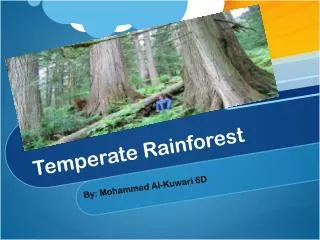
Climate • Average Rainfall- 200 to 340 cm • Average Temperature o C to 20 C • All 4 seasons • Mostly near oceans • Smallest biome by coverage area • Foggy and moist • Made up of conifers, mosses, and lichens
Plant’s Adaptations • Thicker bark on trees • Plants grow large leaves to absorb sunlight • The few deciduous trees lose leaves in winter to they don’t transpire
Plant’s Adaptations • Mosses and lichens thrive here because of the high rainfall • Plants near ground grow/reproduce quickly
Animal’s Adaptations • Home to the only internally fertilizing frog • Hibernate
Animal’s Adaptations • Modified animal sizes • Denser fur • More fat/ most during growing season • Hiding spots/shelter • Migrate
Human Impact • Major • Clear cutting • Minor • Agriculture • Development