Comprehensive Guide to Hair Restoration and Limb Treatments in Embalming Practices
200 likes | 331 Vues
This resource offers an in-depth look at hair restoration methods and treatments for severed or twisted limbs in embalming practices. It covers various hair attachment techniques such as wax attachment, tissue adhesives, and suturing, alongside general directions for eyebrow, mustache, and beard restoration. The guide also addresses pre- and post-embalming treatments for penetrating wounds, tumors, and distention, providing essential methods for effective restorative work. Each technique is designed to enhance the appearance of the deceased with sensitivity and professionalism.


Comprehensive Guide to Hair Restoration and Limb Treatments in Embalming Practices
E N D
Presentation Transcript
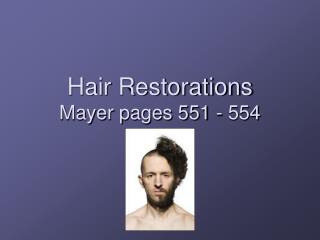
Hair Restorations Sources of Hair
Methods of Attachment • 1) wax attachment • 2) tissue adhesive (cement) • 3) suturing • 4) needle embedding • 5) melted wax
General Directions • Use lengths of hair that are longer than required. • Width of hair patch should not exceed 1”. • Eyebrow & mustache should not exceed 3/8”. • Overlapping • Marginal Form and Position • Final Trimming and Shaping
Sideburn and Temple Crown of the Head • 1) rounded • 2) squared • 3) recessed
Eyebrow • Hair grows obliquely upward and outward. • Head: central plane of forehead • Body: lateral plane of forehead • Tail: lateral rim of the eyesocket • Greatest density is at the head and thinnest is at the tail. • Form and position is important. • Bilateral restoration should be done simultaneously.
Eyelash • Hair is thicker than the hair of the cranium. • May be curved or relatively straight. • Purchased eyelashes usually require trimming. • May be attached to eyecap with tissue adhesive.
Mustache • Wax used because of conspicuous location. • Small hair patches: ¼ “ wide • May need to round/trim top of the hair patch. • Hair patch should be long to allow for trimming.
Types of Mustache • pencil-line • large, prominent • short, cropped • curled • handle-bar
Goatee/Beard • goatee: thin layer of flesh-colored wax • small beard/vandyke: supportive patches applied to the submandibular area • begin at the lower edge of the chin • overlapping is important • full beard: continues above small beard, covers side of cheek and merges with sideburn • Prefabricated facial hair piece may require trimming.
Severed Limbs Embalmed separately. Ligate leaking vessels. Hypodermic injection. Suture muscles. Suture skin. Treatment of suture line. Lengthening the limb.
Missing Limb Arm and Hand Leg
Twisted or Bent Limbs Arthritis Third Degree Burns Prolonged Inactivity Pre-embalming Treatments: Post-embalming Treatments:
Penetrating Wounds • Pistol and Rifle Wounds • Classification: 1) grazing 2) lacerating 3) penetrating 4) perforating 5) high velocity projectile • Surface Characteristics Affecting Restoration • Pre-embalming and Post-embalming Treatments
Punctures Pre-embalming Restorative Treatment Post-embalming Treatment
Neoplasm/Tumor Benign: pre-embalming post-embalming Malignant: pre-embalming post-embalming Abcess
Desquamation Pre-embalming Post-embalming
Distention • Causes: • Embalming • Decomposition • Trauma • Pathological Conditions
Types of Distention Liquid Solid Semi-solid Gaseous Treatment Considerations:
Methods of Reduction Embalming Treatments Gravitation External Pressure Channeling Reducing Chemicals Aspiration Incision Excision Heat Wicking