Download
1 / 25
250 likes | 364 Vues
This content delves into the calculations and characteristics of emitter follower and common emitter amplifier stages based on provided parameters like input voltage (Vin), resistance values (RE, RC), and transistor's hFE. It addresses questions including output voltage (Vout), gain, collector current, base current, emitter current, and input/output impedances. The calculations demonstrate how these parameters interact within a transistor configuration, highlighting key differences between emitter follower and common emitter stages.

E N D
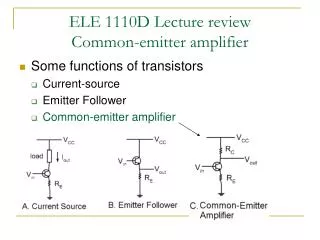
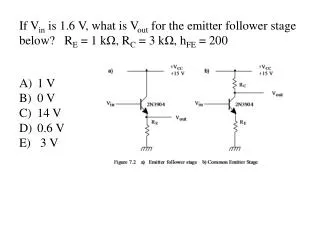
If Vin is 1.6 V, what is Vout for the emitter follower stage below? RE = 1 kΩ, RC = 3 kΩ, hFE = 200 • 1 V • 0 V • 14 V • 0.6 V • 3 V
What is the gain of the emitter follower stage below? RE = 1 kΩ, RC = 3 kΩ, hFE = 200 • -3 • about 200 • 3 • 1 • -1
If Vin is 1.6 V, what is the collector current for the emitter follower stage below? RE = 1 kΩ, RC = 3 kΩ, hFE = 200 • 200 μA • 5 μA • 1 mA • 1.6 mA • 12 mA
If Vin is 1.6 V, what is the emitter current for the emitter follower stage below? RE = 1 kΩ, RC = 3 kΩ, hFE = 200 • 5 μA • 100 μA • 1.6 mA • 1 mA • 1.2 mA
If Vin is 1.6 V, what is the base current for the emitter follower stage below? RE = 1 kΩ, RC = 3 kΩ, hFE = 200 • 200 μA • 5 μA • 1 mA • 1.6 mA • 12 mA
What is the input impedance the emitter follower stage below? RE = 1 kΩ, RC = 3 kΩ, hFE = 200 • 5 mΩ • 200 kΩ • 3 kΩ • 1 kΩ • can’t tell
What is the output impedance the emitter follower stage below? RE = 1 kΩ, RC = 3 kΩ, hFE = 200 • 5 mΩ • 200 kΩ • 3 kΩ • 1 kΩ • can’t tell
If Vin is 1.6 V, what is Vout for the common emitter stage below? RE = 1 kΩ, RC = 3 kΩ, hFE = 200 • 1 V • 0 V • 12 V • 0.6 V • 3 V
What is the gain of the common emitter stage below? RE = 1 kΩ, RC = 3 kΩ, hFE = 200 • -3 • about 200 • 3 • 1 • -1
If Vin is 1.6 V, what is the collector current for the common emitter stage below? RE = 1 kΩ, RC = 3 kΩ, hFE = 200 • 200 μA • 5 μA • 1 mA • 1.6 mA • 12 mA
If Vin is 1.6 V, what is the base current for the common emitter stage below? RE = 1 kΩ, RC = 3 kΩ, hFE = 200 • 200 μA • 5 μA • 1 mA • 1.6 mA • 12 mA
If Vin is 1.6 V, what is the emitter current for the common emitter stage below? RE = 1 kΩ, RC = 3 kΩ, hFE = 200 • 5 μA • 100 μA • 1.6 mA • 1 mA • 1.2 mA
What is the input impedance the common emitter stage below? RE = 1 kΩ, RC = 3 kΩ, hFE = 200 • 5 mΩ • 200 kΩ • 3 kΩ • 1 kΩ • can’t tell
What is the output impedance the common emitter stage below? RE = 1 kΩ, RC = 3 kΩ, hFE = 200 • 5 mΩ • 200 kΩ • 3 kΩ • 1 kΩ • can’t tell
What is the base voltage of the common emitter stage below? • 1.0 V • 1.5 V • 2.6 V • 3.2 V • 5.5 V
What is the emitter voltage of the common emitter stage below? • 0.6 V • 0.9 V • 2.0 V • 3.8 V • 5.5 V
What is the emitter current of the common emitter stage below? • 0.6 mA • 0.9 mA • 2.0 mA • 3.8 mA • 5.5 mA
What is the collector voltage of the common emitter stage below? • 15 V • 12 V • 9.5 V • 4.0 V • 2.8 V
What is the base voltage of the emitter follower stage below? • 15 V • 12 V • 9.5 V • 8.9 V • 2.8 V
What is the emitter voltage of the emitter follower stage below? • 15 V • 12 V • 9.5 V • 8.9 V • 2.8 V
What is the base current of the common emitter stage below? Assume β = 200. • 100 μA • 10 μA • 1 mA • 3 mA • 1.9 mA
How much does the base current of the common emitter stage pull down the input voltage divider? • 1.5 V • 12 μV • 9.5 V • 8.9 V • 80 mV
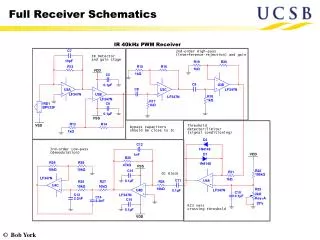
What is the input impedance of this two-state amplifier at 10 kHz? Assume β = 200 and the pot wiper is at ground. • 8 kΩ • 200 kΩ • 57 kΩ • 1 kΩ • can’t tell
What is the output impedance of this two-state amplifier at 10 kHz? Assume β = 200. • 16 Ω • 820 Ω • 0.8 Ω • 1 kΩ • can’t tell
What is the maximum gain of this two-state amplifier at 10 kHz? Assume β = 200. • 2.7 • 210 • 2000 • 6.7 • can’t tell