Download
1 / 10
100 likes | 215 Vues
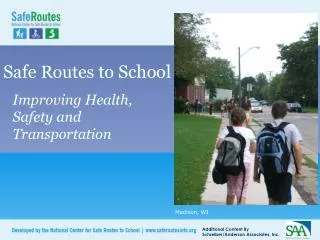
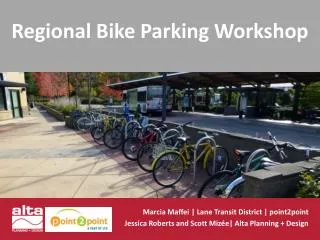
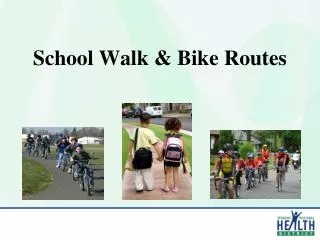
School walk and bike routes are essential for promoting safe and active transportation for students. Based on a one-mile radius from the school, these routes should include a map or written document outlining safety improvements, required by law (ESHB 2261). Involving school administrators, local agencies, law enforcement, and parents is crucial for success. Key steps include creating a base map, inventorying conditions, identifying routes, and collaborating with community partners. Resources such as the Washington State Department of Transportation provide tools and funding to enhance these initiatives for healthier, safer, and more sustainable school environments.

E N D
What are they? • A map or written document • One mile radius of the school • A plan for safety improvements • Considerations • Resource: WA Admin Code 392-151-025
Why do them? • Required by law: ESHB 2261, RCW 47.04.300 • Improve health & safety • Improve learning • Reduce traffic and pollution • Save $
Who to involve • School Administrators • Local public works agencies • Local law enforcement • Elected officials • Parent-school organizations • Parents & Students
How to get started • Base map (1 mi radius of school attendance area) • Inventory conditions & traffic • Identify walk/bike route • Develop & distribute route to families • Work with community partners • Evaluate
Resources • Websites • Tools • Funding • Contact info
Websites • Washington State Department of Transportation http://www.wsdot.wa.gov/localprograms/saferoutes/ • School Walk and Bike Routes http://www.wsdot.wa.gov/NR/rdonlyres/5463FD69-F7B9-477D-B9AA-D21CEEFCF722/0/SchoolAdminGuide.pdf • National Center for Safe Routes http://www.saferoutesinfo.org/training/can_webinars.cfm • Developing a Safe Routes Project http://www.wsdot.wa.gov/LocalPrograms/SafeRoutes/planning.htm
Tools • Bikeability Checklist • Walkability Checklist • Intersection Observation Form • Environmental Assessment • Walk Route Planning • Evaluation forms
Funding • Safe Routes to School • School Zone Crossing Lights • Mini-Grants • Other
Contacts • WA DOT SR2S Coordinator Charlotte Claybrooke (360) 705-7302 ClaybrC@wsdot.wa.gov • Natalie Tauzin Spokane Regional Health District 509 324-1659 ntauzin@spokanecounty.org