Download

1 / 15
150 likes | 290 Vues
Chapter 15, Section 5 explores the decline of Communist nations post-Cold War, focusing on the Soviet Union's stagnating command economy and inefficiencies leading to food shortages and military struggles. Mikhail Gorbachev's reforms, including Glasnost (openness) and Perestroika (restructuring), aimed to revitalize the communist state but instead contributed to its collapse. The chapter also discusses the wave of change across Eastern Europe, highlighting movements in Hungary, Poland, and East Germany that demanded political and economic reforms, ultimately leading to the fall of communist governments and the rise of nationalism.

E N D
The End of the Cold War Chapter 15 Section 5
Soviet Union Declines • Command Economy Stagnates • Russia lacks food • Inefficiency and waste • Needs not met • Military Commitments • Economy can’t afford military/arms race • War in Afghanistan • Similar to Vietnam for U.S.
Mikhail Gorbachev • Proposes reform • Glasnost • Openness • Ended censorship and encouraged discussion • Perestroika • Restructuring of government and economy • Reforms lead to collapse of Soviet Union
Check for Understanding • How might Gorbachev’s changes have lead to the decline of a communist state?
Changes Transform Eastern Europe • Demands for freedom increase • Hungary reforms • Rewarded for loyalty and allowed to change • Poland embraces Solidarity • Independent labor union (Lech Walesa) • Demanded political and economic change • Outlawed and arrested
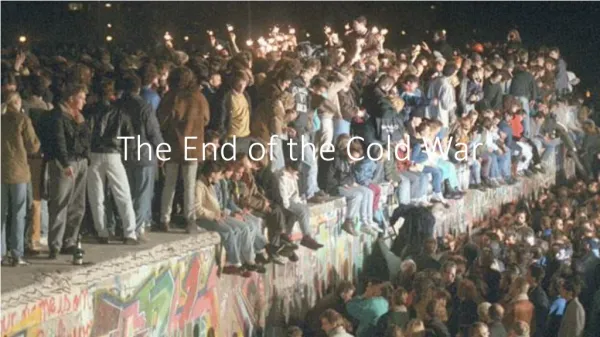
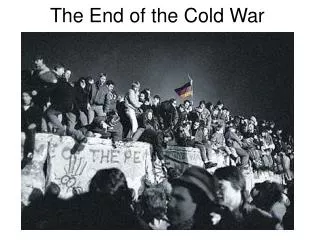
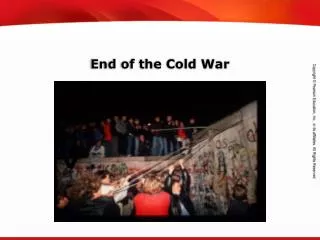
Changes Transform Eastern Europe • East Germans demand change • Communist Governments Fall • Czechoslovakia Splits • Vaclav Havel leads split • Split along ethnic lines (nationalism)
Communism Declines Around the World • China continues to blend capitalism with communism • Vietnam reestablishes relations with world • North Korea continues isolationism • Cuba declines