
Understanding Subsequent Events in Financial Reporting
E N D
Presentation Transcript
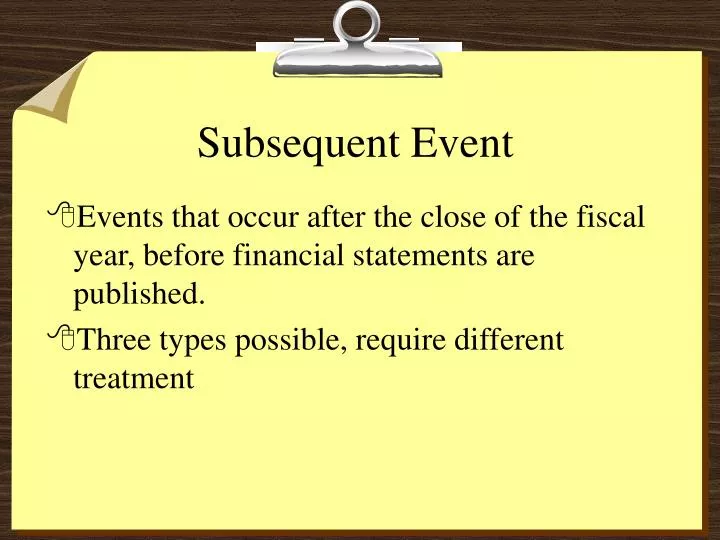
Subsequent Event • Events that occur after the close of the fiscal year, before financial statements are published. • Three types possible, require different treatment
Subsequent Events: • Event is a culmination of prior conditions and has material effect • Event is the result of new developments and has a major effect • Event is the result of new developments and does not have a major effect
Subsequent Event - Culmination of prior condition • Requires adjustment of balance sheet: • Example: Major customer declares bankruptcy: • Required action: Adjust accounts receivables, recognize loss on income statement
Subsequent Event: Result of new development • Event has a material effect: • e.g.: major plant facility is destroyed • Action required: Footnote disclosure • Event does not have material effect: • Ignore (will be recognized in new fiscal year)