Challenging Media Perceptions of Body Image: A Realistic Approach
The media bombards us daily with images that depict the "ideal" male and female body types, often unattainable for most individuals. Advertisers equate beauty with happiness, influencing consumer behavior and self-image. This body image discourse critically analyzes media portrayals, questioning their realism and cultural impact. It scrutinizes popular commercials, the idealized figures they showcase, and the messages they convey. To foster a healthier perspective, we must advocate for more realistic representations in media, promoting body diversity and acceptance.
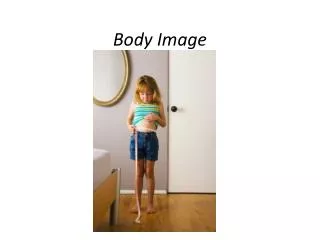

Challenging Media Perceptions of Body Image: A Realistic Approach
E N D
Presentation Transcript
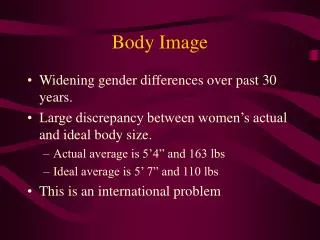
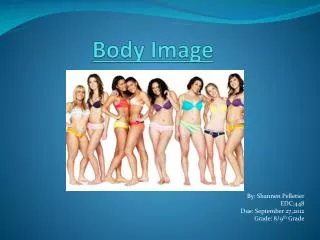
The Media • Everyday we are hit with thousands of media images which show us the “ideal” male and female looks. However, very few people actually match up to these ideals. Advertisers use body images to promote their products by showing that beauty equals happiness.
Classwork: • Define BODY IMAGE • How does the media portray the ideal male and ideal female appearance? • List several popular commercials. • Who appears in the commercials and what do they look like? • What is the message the commercial is trying to send? • Is the message real? • In what ways would you change the media images to help people see a more realistic view of life?
Dove • http://www.youtube.com/watch?v=iYhCn0jf46U • Photo Shop • http://www.youtube.com/watch?v=YP31r70_QNM&feature=related
If Barbie were real woman, she would not be able to menstruate. • “her narrow hips and concave stomach would lack the 17 to 22 percent body fat required for a woman to have regular periods”
1965 to be exact, with the introduction of “Slumber Party Barbie”, that the doll’s creators encouraged the young female consumers to become obsessed with their own weight.
Along with the set of pink plastic hair curlers, the doll included some “bedtime reading—a book called How to Lose Weight that offered this advice: