Download
1 / 7
70 likes | 284 Vues
The respiratory system is essential for providing oxygen to the body and removing carbon dioxide. It works closely with the circulatory system, ensuring that oxygen-rich blood circulates throughout the body. Key organs include the lungs, airways, nose, mouth, throat, larynx, alveoli, and windpipe. Breathing in through the nose and mouth allows oxygen to reach the lungs via the bronchi, where it is exchanged for carbon dioxide in the alveoli. The expelled carbon dioxide is then released through the same pathways.

E N D
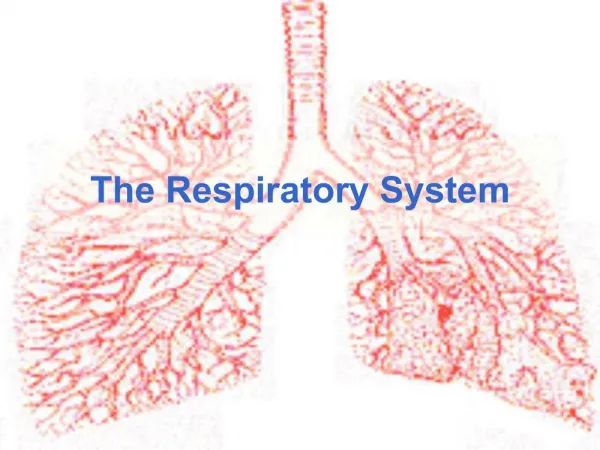
The Respiratory System Selah Jordan Jake Weems
The Respiratory System • Its function is to provide the body with oxygen and to dispose of carbon dioxide. • It mainly works with the circulatory system by providing the blood in the system with oxygen to transport it.
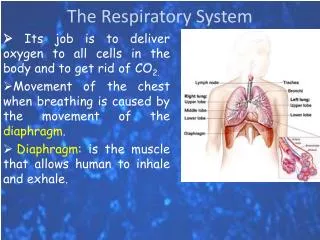
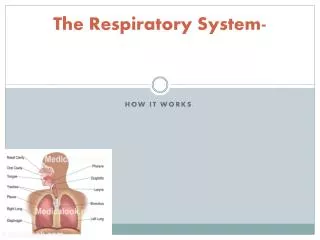
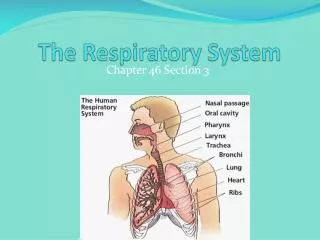
Organs • The respiratory system consist of the lungs, airway, nose, mouth, throat, larynx (voice box), alveoli, and windpipe.
Nose, Mouth, and Throat • The nose and mouth take in air which contains oxygen. • The air then travels through the throat and to the lungs. • They also release air that has carbon dioxide in it.
The air goes through the bronchi (air tunnels that lead to the left and right lungs) to get to the lungs. • The inhaled air travels through the alveoli and then disperses through the capillaries into the arterial blood. • The blood then travels through the body and gets rid of the oxygen and collects the carbon dioxide.
While the oxygen is dispersing into the blood, carbon dioxide enters the lungs through the alveoli. • When you breathe out the carbon dioxide travels back through the bronchi through the throat and out your mouth/nose.
Work Cited • http://www.fi.edu/learn/heart/systems/respiration.html