1 / 14

Comprehensive Guide to Lisfranc Injuries and Tarsometatarsal Dislocations

This guide covers the anatomy and examination of Lisfranc injuries and tarsometatarsal dislocations. It emphasizes the importance of weight-bearing X-rays (AP, lateral, and oblique views) for accurate diagnosis and differentiation from stable midfoot sprains. Recommendations include comparative imaging if needed and possibly repeating weight-bearing X-rays if no positional changes occur. Management strategies may involve the use of a moon boot where necessary, with an expectation of activity-related symptoms for up to six months. Surgical options like CT or ORIF are discussed for long-term care.

kerry
Télécharger la présentation

Comprehensive Guide to Lisfranc Injuries and Tarsometatarsal Dislocations

An Image/Link below is provided (as is) to download presentation Download Policy: Content on the Website is provided to you AS IS for your information and personal use and may not be sold / licensed / shared on other websites without getting consent from its author. Content is provided to you AS IS for your information and personal use only. Download presentation by click this link. While downloading, if for some reason you are not able to download a presentation, the publisher may have deleted the file from their server. During download, if you can't get a presentation, the file might be deleted by the publisher.

E N D

Presentation Transcript


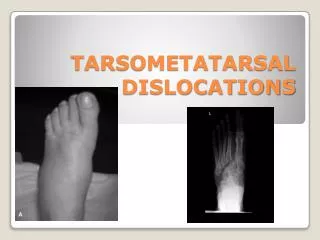
  1. TARSOMETATARSAL DISLOCATIONS

  2. Lisfranc injuries

  3. Anatomy

  4. Examination

  5. XraysWeightbearing if possible AP+LAT+OBLIQUE

  6. Oblique

  7. Lateral

  8. WeightbearingXray

  9. “Stable Midfoot sprain”Normal WeightbearingXrays Comparative if need be Repeat weightbearingXrays with no change in position WBAA Moonboot if required Expect activity related Sx for 6 mths


  10. Management

  11. CT

  12. ORIF

  13. Long term

  14. Thank you

More Related