Download
1 / 1
10 likes | 123 Vues
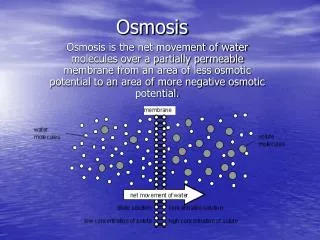
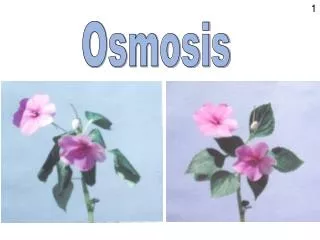
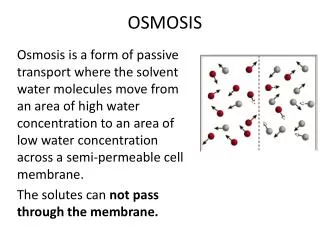
This content explores the concept of passive transport, focusing on osmosis as a specific type. It explains how water molecules move freely around the cell, particularly near organelles, and outlines the three possible directions of water movement. Additionally, the definitions of hypertonic, hypotonic, and isotonic solutions are provided, as well as the concept of equilibrium. The potential consequences of an unchecked hypotonic solution on a cell's structure and function are also discussed, highlighting the importance of osmotic balance in cellular health.

E N D
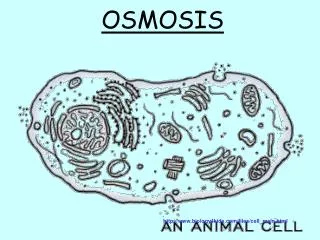
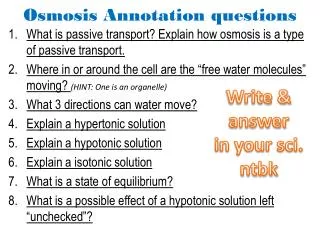
Osmosis Annotation questions • What is passive transport? Explain how osmosis is a type of passive transport. • Where in or around the cell are the “free water molecules” moving? (HINT: One is an organelle) • What 3 directions can water move? • Explain a hypertonic solution • Explain a hypotonic solution • Explain a isotonic solution • What is a state of equilibrium? • What is a possible effect of a hypotonic solution left “unchecked”? Write & answer in your sci. ntbk