Download
1 / 22
220 likes | 335 Vues
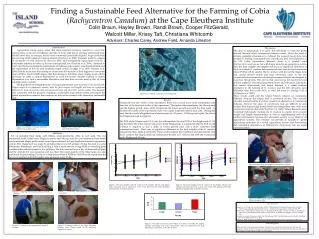
The Cape Eleuthera Institute in the Bahamas is at the forefront of researching sustainable cobia mariculture from breeding to market. Utilizing artificial mangroves for waste water treatment and submerged sea stations at depths of 40-90 ft, the institute has a capacity of 120 tons annually. Cobia (Rachycentron canadum) is a rapidly growing species with great texture and taste, making it economically significant in aquaculture. Research focuses on breeding, larval production, and innovative production methods for optimal growth and sustainability.

E N D
Cape Eleuthera Institute • Bahamas • Researching sustainable cobia mariculture from breeding to market • Use artificial mangroves for waste water treatment • Grow out in offshore, deep water (40-90 ft deep) submerged sea stations • Capacity of 120 tons a year • http://www.youtube.com/watch?v=ZZr246dBTAo
Aquaculture of Cobia Rachycentroncanadum
Cobia are Awesome! “Aquapod” Offshore environmentally friendly containment Sport fishing
Impressive Statistics • Grow to 78 inches long and 135 pounds • Strong pelagic swimmers • Strong fighters and are “Sport fish” • Very fast growing in comparison to other fin fish • Meat has great texture, few bones, and great taste
Economic Importance • Raised for food! • Gaining economic importance in Southeast Asia and China • Good tasting/texture flesh and fast growth make it a potentially good species for mariculture • Has potential to outrun salmon in commercial success. • Grows faster than salmon
Countries of Importance • Top five producers • Taiwan • Pakistan • Philippines • Brazil • United Arab Emirates • Countries looking into culture due to economic value • U.S.A. • China • Taiwan
Market price is higher than most other finfish • In Taiwan • Produce 13-17lb market size fish (export to Japan) • Produce 17-22lb fish for domestic consumption • Sells for about $2.50 per lb. • Costs about $1.10 per lb. to culture • Produced more than 5000 tons in 2004 • In Puerto Rico • $3-$4 per lb. • Shipped to Miami • In China • About $2-$3 per lb. (~$45 for 17lb fish)
Life Cycle • Spawn in aggregations, release many small planktonic eggs • Eggs hatch 24-36 hours after fertilization • Planktonic larvae 2.5 mm long • After five days develop eyes and mouth, begin feeding • At 30 days look like small adult • Sexually mature at 2-3 years • Live to about 12 years (135#)
Larval and Juvenile Cobia Late larval stage >6 days Juvenile >30 days Larvae at 12 days old
Reproduction in Captivity • Brood stock are kept in tanks or ponds • Larvae can also be purchased for culture • They are triggered to breed with • Natural water temperature changes • Hormonal additions to the water • Eggs are hatched out in recirculation tanks • They float and are just scooped out of the water • larvae are fed started about 3 days after hatching
Production Methods for Hatchery • Recirculation Systems used for Hatchery and Nursery • Also Green water ponds • Fed rotifers at 3 days • Microalgae and Artemianauplii at 7 days • High density larval rearing can give low survival rate • Lowering the density can raise the survival rate • The larvae are size graded at least 3 times before grow out to reduce cannibalism
Incubation and Hatching Tank 2000L cone shaped tank Flow through system 20L/min flow speed
Production Methods for Grow Out • Open net cage method • Used in most places it is cultured • Offshore technology being developed • In the US and Bahamas • Recirculation systems • Suitable and in development • Ponds • Used in some countries
Water Chemistry • Recirculation Systems for eggs and larvae • Target temperature range 28-29C • Optimal salinity 25ppt (not to exceed 35ppt) • pH close to 8 • High levels of aeration • D.O. 8-9 mg/L • Grow out systems need similar conditions to warm tropical and subtropical waters • Temperature is most important • Must be done in warm areas
Feeds and Feeding • Larvae eat very small planktonic organisms • Adult fish are carnivorous • Crabs, Squids, Shrimp, Fish • In captivity are generally fed commercial fish meal • Other options are being studied
Very fast growing • Good economic investment (good return) • Great tasting and popular meat • Fare well in cultured environments • May keep wild populations safer if meat available from culture • Ongoing research to address problems • “up and coming” species • Some problems with juvenile survival rates in intensive systems and transportation • Carnivorous diet hard to replicate without fish meal which has environmental concerns • Cage systems have same environmental concerns as salmon and other large cages fishes Advantages Disadvantages