SlideServe
Menu
Préférences
© SlideServe · v2026

Endangered Animals

kimberly avatar
6 diapositives · 482 Views · Aug 02, 2014

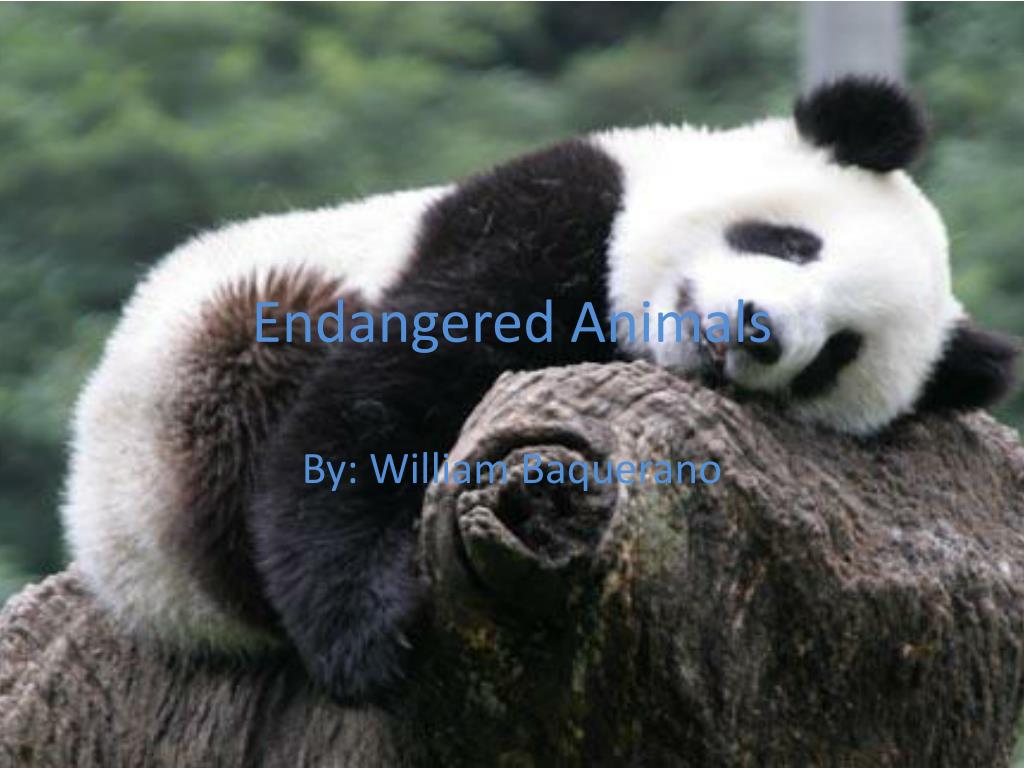
Endangered Animals. By: William Baquerano. Basic Unit Questions. What does endangered mean? What kind of animals are endangered? How do animals become endangered? What can we do as individuals to help endangerd animals?. Learning Objectives.
Endangered Animals - slide 1
01 / 6Endangered Animals
1 / 17

Télécharger la présentation

Endangered Animals
Une image / un lien ci-dessous est fourni (tel quel) pour télécharger la présentation

Politique de téléchargement : le contenu du site vous est fourni TEL QUEL pour votre information et votre usage personnel ; il ne peut être vendu, concédé sous licence ni partagé sur d’autres sites sans l’accord de son auteur.Le contenu vous est fourni TEL QUEL, pour votre information et votre usage personnel uniquement. Téléchargez la présentation en cliquant sur ce lien. Lors du téléchargement, si vous ne parvenez pas à télécharger une présentation, l’éditeur a peut-être supprimé le fichier de son serveur.Pendant le téléchargement, si vous ne parvenez pas à obtenir une présentation, le fichier a peut-être été supprimé par l’éditeur.

F I N

Plus de contenu associé

Transcription de la présentation
  1. Endangered Animals By: William Baquerano

  2. Basic Unit Questions • What does endangered mean? • What kind of animals are endangered? • How do animals become endangered? • What can we do as individuals to help endangerd animals?

  3. Learning Objectives • Distinguish some of the animals that are endangered. • See that endangered species come from different environments • Know what to do to help minimize the list of endangered species

  4. Activities • Complete a class book on endangered species. • Endangered species map game. • Name steps that can be taken to save animals from extinction

  5. TEKS 3rd Grade • (8) Science concepts. The student knows that living organisms need food, water, light, air, a way to dispose of waste, and an environment in which to live. The student is expected to: • (A) observe and describe the habitats of organisms within an ecosystem; • (B) observe and identify organisms with similar needs that compete with one another for resources such as oxygen, water, food, or space; • (C) describe environmental changes in which some organisms would thrive, become ill, or perish; and • (D) describe how living organisms modify their physical environment to meet their needs such as beavers building a dam or humans building a home.

  6. REFRENCES • TEKS:http://ritter.tea.state.tx.us/rules/tac/chapter112/ch112a.pdf • WWF: http://www.worldwildlife.org/how/index.html • Endangered Creatures: http://www.earthsendangered.com/list.asp