Tracer Gas Study: Capture Jet Exhaust Efficiency Analysis
10 likes | 156 Vues
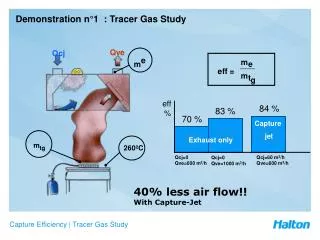
This demonstration presents a comprehensive tracer gas study evaluating the capture efficiency of a capture jet exhaust system. The results indicate a significant reduction in airflow requirements, with capture efficiencies as high as 84% under various operational conditions. The study examines different settings including Qcj and Qve rates, showcasing a 40% reduction in air flow for optimal performance at 260ºC. This research is crucial for improving ventilation systems in industrial applications and enhancing air quality management.


Tracer Gas Study: Capture Jet Exhaust Efficiency Analysis
E N D
Presentation Transcript
m e eff = m t g Demonstration n°1 : Tracer Gas Study Qcj Qve me eff % 84 % 83 % 70 % Capture jet Exhaust only mtg 260ºC Qcj=0Qve=600 m3/h Qcj=60 m3/h Qve=600 m3/h Qcj=0Qve=1000 m3/h 40% less air flow!!With Capture-Jet Capture Efficiency | Tracer Gas Study