REGULATING CHOICE
This text explores the rationale behind the regulation of choices in society, focusing on individuals who may be incapable of making informed decisions due to cognitive or physical limitations, such as children and the elderly. It discusses asymmetric information, where sellers possess more knowledge than buyers, particularly in medical and financial contexts. The government's role in restricting certain choices, like underage drinking and smoking, is highlighted, along with the potential downsides of regulations that may inhibit access to beneficial products. Alternatives such as private warranties and consumer research organizations are also proposed.

REGULATING CHOICE
E N D
Presentation Transcript
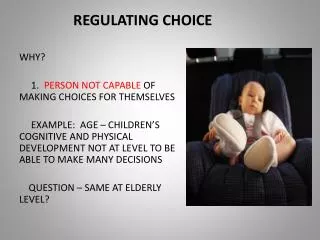
REGULATING CHOICE WHY? 1. PERSON NOT CAPABLE OF MAKING CHOICES FOR THEMSELVES EXAMPLE: AGE – CHILDREN’S COGNITIVE AND PHYSICAL DEVELOPMENT NOT AT LEVEL TO BE ABLE TO MAKE MANY DECISIONS QUESTION – SAME AT ELDERLY LEVEL?
REGULATING CHOICE (CON’T.) OR, ASYMMETRIC INFORMATION – SELLER HAS MORE INFORMATION THAN BUYER * MEDICAL * FINANCIAL
IN THESE CASES, GOVERNMENT STEPS IN TO RESTRICT CHOICE UNDER-AGE DRINKING, SMOKING DRIVING FDA (FOOD AND DRUG ADMINISTRATION) – MONITORS DEVELOPMENT AND SALE OF PHARMACEUTICALS CONSUMER FINANCIAL PROTECTION BUREAU – SET REQUIREMENTS FOR SALE OF FINANCIAL PRODUCTS
BUT COSTS OF PRODUCT REGULATIONS 1. CAN DELAY OR INHIBIT SOME USEFUL PRODUCTS ADDS TO COST OF PRODUCT RESTRICTS FREE CHOICE – “I’M THE BEST JUDGE OF WHAT’S GOOD FOR ME.” MAY MOTIVATE CONSUMERS TO DO LESS INFORMATION COLLECTION ON OWN
ALTERNATIVES TO REGULATIONS FOR “INFORMATIONAL” REGULATIONS: PRIVATE WARRENTIES, GUARANTEES, AND CERTIFICATIONS PRIVATE RESEARCH GROUPS LIKE CONSUMERS UNION (CONSUMER REPORTS)