Understanding Ecology: Interactions Between Organisms and Their Environments
This overview of ecology explores the intricate relationships between organisms and their environments. It distinguishes between biotic factors (living organisms) and abiotic factors (nonliving elements like air, temperature, and light) vital for sustaining life in the biosphere. The text delves into feeding relationships, trophic levels, and the energy transfer rule of 10%, illustrating how energy moves through ecosystems. Additionally, it examines cycles such as the water, carbon, and nitrogen cycles, highlighting key processes that support life on Earth.

Understanding Ecology: Interactions Between Organisms and Their Environments
E N D
Presentation Transcript
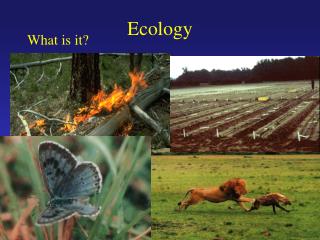
Ecology Study of interactions between organisms and their environments.
Biotic Factors • Biosphere – life-supporting layer of Earth • Biotic factors – all living organisms in a biosphere
Abiotic Factors • Nonliving factors in an environment • Examples: • Air currents • Temperature • Moisture • Light • Soil
Organization of Life Biosphere Ecosystems Communities Populations Organisms
Feeding Relationships • Autotrophs • Heterotrophs • Carnivores • Omnivores • Herbivores • Decomposers
Trophic Relationships • Autotrophs • 1st level consumers (herbivores) • 2nd level consumers • 3rd level consumers • 4th level consumers (top predators)
RULE OF 10 • Only 10% of energy is transferred from one trophic level to the next. • Example: • It takes 100 kgs of plant materials (producers) to support 10 kgs of herbivores • It takes 10 kgs of herbivores to support 1 kg of 1st level predator
Water cycle • Evaporation • Transpiration • Precipitation • Runoff • Groundwater
Carbon cycle • Combustion • Photosynthesis • Respiration • Decomposition • Fossil fuels
Nitrogen cycle • Atmospheric nitrogen • Runoff • Fertilizers • Decomposition • Nitrogen fixing • Synthesis of amino acids